

The compost bins make it genuinely easy to keep food waste out of the landfill, even if you live in an apartment with no yard and no tolerance for smells. Indoor and countertop compost bins have improved dramatically in the last few years, and the current crop of electric composters, bokashi fermenters, and well-designed scrap caddies means you no longer need a backyard pile to compost responsibly at home.
This guide focuses on the compost bins that actually live indoors: countertop caddies that hold scraps until collection day, bokashi buckets that ferment food waste without odor, electric units that break scraps down in a day or two, and compact worm composters. We compared capacity, price, smell control, and how much hands-on work each one needs so you can pick the right fit for your kitchen and your lifestyle.
If your goal is to cut household waste, make a free-soil amendment for houseplants, or just stop feeling guilty about banana peels, there is a compost bin on this list that fits. Below are the best compost bins of 2026 for indoor and countertop use, what each one costs, and how to choose between them.
Why compost indoors at all
The average household throws away a surprising amount of food, and most of it ends up in a landfill where it breaks down without oxygen and produces methane, a potent greenhouse gas. Composting at home keeps those scraps in a useful loop. Even if you cannot use finished compost on a garden, many cities and community gardens accept it, and a few electric units produce a dry, odorless byproduct you can sprinkle into houseplant soil.
Indoor composting is also convenient. A countertop caddy sits next to your cutting board, so sorting scraps takes seconds. Bokashi and electric systems handle meat, dairy, and cooked food that a traditional bin cannot, which removes the usual excuse that “composting is too limiting.” The upfront cost is modest, and the payoff is less trash, fewer smells, and a small but real environmental win.
The main types of indoor compost bins
Before comparing specific products, it helps to know the four categories that dominate indoor composting. They solve different problems, so the “best” one depends on how much food waste you generate and how much effort you want to spend.
| Type | How it works | Handles meat/dairy | Effort level | Typical price |
|---|---|---|---|---|
| Countertop caddy | Collects scraps in a sealed bin until you empty it | No (collects only) | Very low | $20–$40 |
| Bokashi system | Ferments all food waste with beneficial microbes in an airtight bucket | Yes | Low–medium | $50–$90 |
| Electric composter | Heats and grinds scraps into a dry soil additive in 4–24 hours | Yes | Very low | $350–$550 |
| Worm composter | Red wigglers eat scraps and produce worm castings | No (no meat/dairy) | Medium | $70–$130 |
A countertop caddy is a collector, not a finisher: you still need a municipal compost program, a backyard, or a friend with a pile to actually break it down. The other three finish the process indoors, which is why they cost more and why apartment dwellers tend to gravitate toward bokashi or electric units.
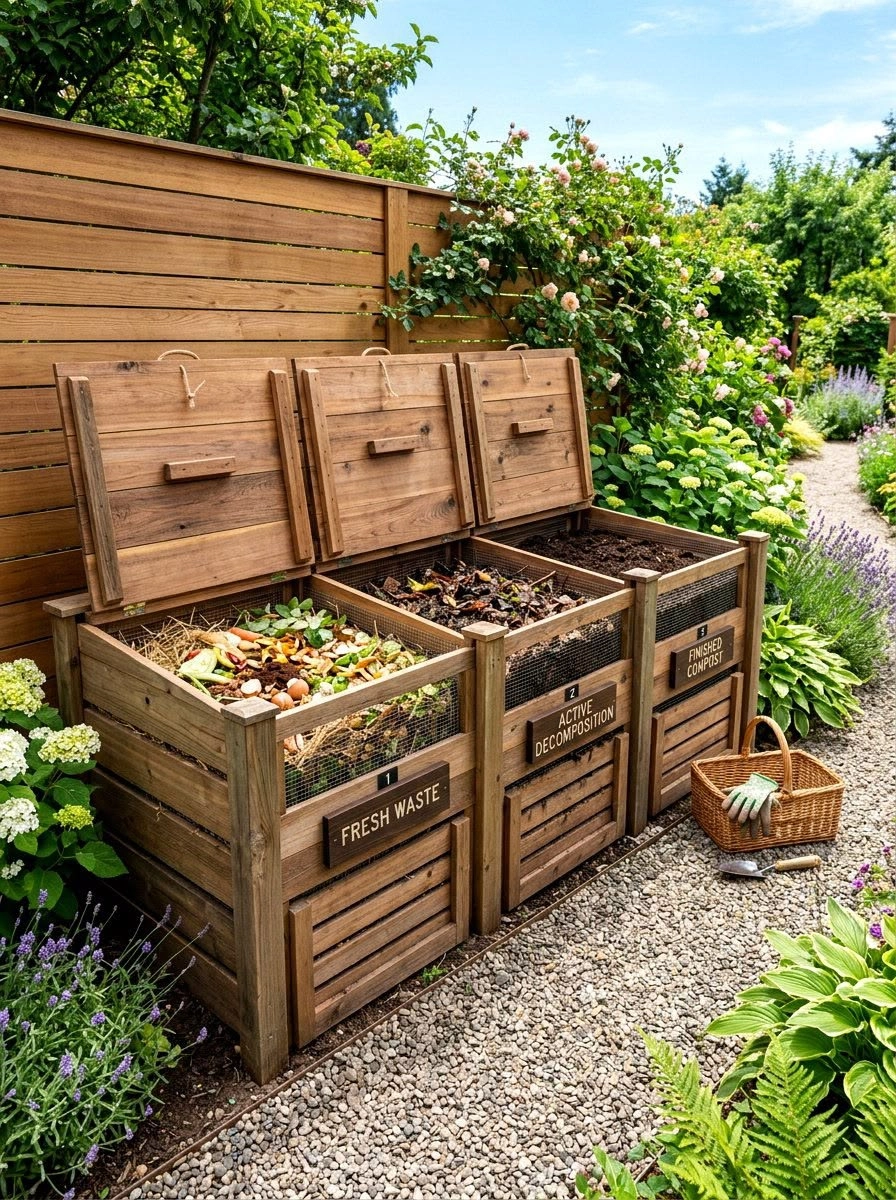
The best compost bins of 2026
We ranked the standout indoor and countertop options across price, smell control, capacity, and real-world ease of use. Prices are typical retail estimates and shift with sales, so treat them as ballpark figures rather than fixed quotes.
| Product | Type | Capacity | Price (approx.) | Best for |
|---|---|---|---|---|
| Lomi 2.0 by Pela | Electric composter | 3 L bucket | ~$499 | Fastest all-in-one breakdown, sleek countertop look |
| Vitamix FoodCycler FC-50 | Electric food recycler | 2 L (holds ~5 L scraps) | ~$399 | Quiet operation from a trusted appliance brand |
| Reencle Prime | Electric microbial composter | 2.8 L | ~$499 | Continuous odor-free use with living microbes |
| SCD Probiotics Bokashi System | Bokashi fermenter | 5 L bucket | ~$70 | Small spaces, no electricity, handles all food |
| OXO Good Grips Easy-Clean Compost Bin | Countertop caddy | 1.75 L | ~$30 | Simple, durable scrap collection |
| VermiHut Plus 5-Tray Worm Composter | Worm composter | 5 stacking trays | ~$90 | Continuous castings for serious plant lovers |
Lomi 2.0 by Pela is the most recognizable electric countertop composter, and the 2026 version refines the filters and cycle times of the original. It handles fruit, veg, coffee grounds, bread, and even small bones on some settings, turning about a day of kitchen scraps into a dry, soil-like material in roughly 4 to 20 hours depending on the mode. The downside is the price and the fact that the byproduct is a soil amendment, not finished compost, so you still mix it into soil rather than use it alone.
Vitamix FoodCycler FC-50 takes a similar electric approach but skips the marketing flash in favor of a straightforward, quiet appliance. It grinds and dehydrates scraps into a neutral-smelling byproduct you can bury or bin. It is a good pick if you already trust the Vitamix name and want something that just runs without app connectivity or gimmicks.
Reencle Prime uses living microbes rather than pure heat, which means it can accept scraps continuously rather than one batch at a time. Owners report almost no smell because the digestion is aerobic and constant. It is pricier and larger on the counter, but for a household that cooks daily it is the most “set and forget” of the electric options.
SCD Probiotics Bokashi System is the budget hero. For around $70 you get an airtight bucket and a supply of bokashi bran inoculated with effective microorganisms. You layer scraps with bran, press them down, and seal the lid; the food ferments rather than rots, so there is no rotten smell, just a faint pickly scent. The catch is that bokashi output still needs a final step, either buried in soil or added to an outdoor pile, because it is fermented, not fully decomposed.
OXO Good Grips Easy-Clean Compost Bin is the classic countertop caddy. It will not finish compost, but its flip-top lid, replaceable charcoal filter, and smooth interior that wipes clean make daily scrap collection painless. If your city collects organics or you have an outdoor bin, this is the simplest first step.
VermiHut Plus 5-Tray Worm Composter is for people who want genuine worm castings, the gold-standard soil booster. Red wigglers live in stacked trays and process veg scraps, paper, and cardboard into castings you harvest from the bottom. It takes a little learning and a cool, indoor corner, but it runs continuously and costs almost nothing to operate.
Best simple countertop scrap caddies
If you are not ready to buy an electric unit or keep worms, a countertop caddy is the right entry point. Beyond the OXO above, the Epica Stainless Steel Compost Bin (about $25) is a long-running favorite because stainless steel does not stain or hold odors the way plastic can, and its charcoal filter keeps things neutral. The Bamboozle Countertop Compost Bin (about $35) is made from biodegradable bamboo fiber and looks at home on a open shelf, while the Full Circle Fresh Air Compost Bin (about $30) uses a vented “fresh air” lid that surprisingly reduces smells without a filter.
The key features to look for are a tight seal, a charcoal or activated-carbon filter, and an interior you can actually clean. A 1 to 2 liter capacity is plenty for a couple or small family between empties; larger households should empty more often or step up to an electric unit.
Best electric indoor composters
Electric composters are the most expensive but the most convenient. Alongside Lomi, Vitamix, and Reencle already covered, the Kalea Home Composter (about $490) is a newer entrant that markets itself as fully automatic: you add scraps and it handles the rest on a continuous cycle. These machines use heat, grinding, and sometimes microbes to shrink volume by roughly 80 to 90 percent and remove most of the weight as water vapor.
Be realistic about what “compost” means here. The output is a dried, sterile byproduct best mixed into soil, not a living compost you can spread directly. Running costs are low (mostly electricity), but replacement filters or microbe pods are an occasional expense. For most apartments, an electric composter is the only way to “finish” compost fully indoors.
Best bokashi systems
Bokashi is the smartest low-cost choice for people who want to process all food waste, including meat and cheese, without electricity. The SCD Probiotics Bokashi System is the standard, but the Bokashi Living Bucket Kit (about $60) and the Masontops Bokashi Bud (about $45, designed to convert a mason jar) are solid alternatives. All work the same way: a sealed bucket, a sprinkle of bran, and patience. After two weeks of fermentation you bury the contents or add them to any outdoor system, and they break down in weeks rather than months.
Best worm composters (vermicomposting)
Worm composting sounds intimidating but is remarkably low-odor when done right, because worms and their bedding want a damp, airy environment, not a soggy mess. The VermiHut Plus is our top pick, with a “worm-saving” tray design that keeps worms from falling into the liquid reservoir. The Worm Factory 360 (about $120) is the more established brand with a similar stacking design and a handy instructional DVD, while the compact Urban Worm Bag (about $70) is a fabric option that holds more than it looks like it should and tucks into a closet corner.
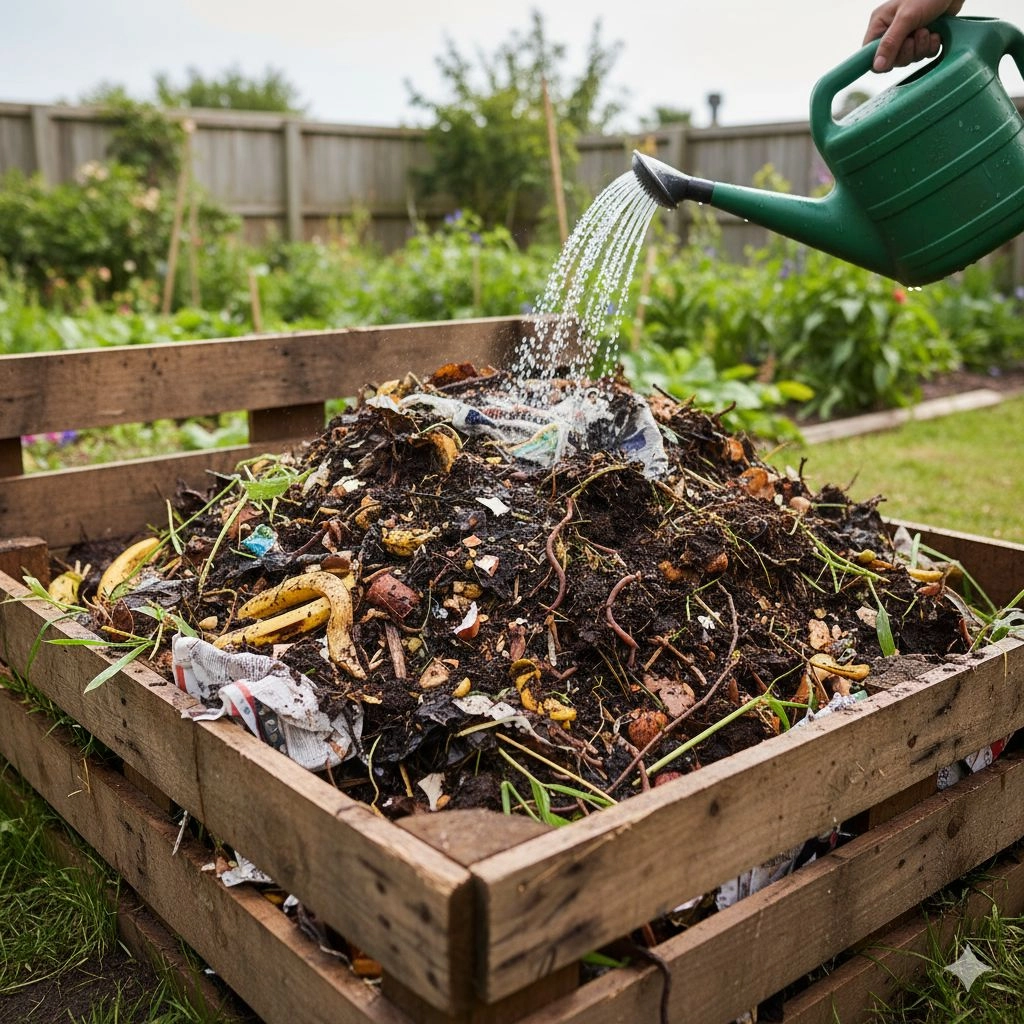
DIY Compost from Kitchen Waste
Composting your kitchen scraps is one of the easiest eco-habits to build—it cuts landfill waste, feeds your plants, and costs almost nothing. Here’s a practical DIY guide.
What You Can Compost
Greens (nitrogen—wet, decomposes fast)
- Fruit and veggie scraps
- Coffee grounds and paper filters
- Tea leaves and bags (remove staples)
- Eggshells
- Fresh grass clippings
Browns (carbon—dry, adds structure)
- Dry leaves
- Shredded newspaper or cardboard (avoid glossy)
- Paper towels (unbleached, no grease)
- Sawdust (untreated wood)
- Straw or hay
Avoid
- Meat, fish, bones, dairy (attract pests, smell)
- Oily or greasy foods
- Pet waste
- Diseased plants
- Plastic, metal, glass
Method 1: Simple Bucket System (Apartment-Friendly)
- Get two buckets with lids—one for collecting scraps, one as the main bin
- Drill holes in the bottom and sides of the main bucket for airflow and drainage
- Layer: start with 2–3 inches of browns, then add scraps, then cover with more browns
- Keep the ratio roughly 2–3 parts browns to 1 part greens
- Turn it every few days with a stick or trowel to add oxygen
- Keep it moist like a wrung-out sponge—not soggy, not bone dry
Expect finished compost in 4–8 weeks in warm weather.
Method 2: Outdoor Bin or Pile
- Pick a spot with partial shade and good drainage
- Build or buy a bin—wire mesh, pallets, or a cheap plastic bin with holes
- Alternate layers of greens and browns, like lasagna
- Turn weekly to speed things up
- Water occasionally if it dries out
Method 3: Bokashi (Fermentation, No Smell)
Great for small spaces and handles meat/dairy.
- Get a bokashi bin with a spigot and bran inoculant
- Add scraps, sprinkle bran, press down, seal
- Drain the liquid every few days—dilute 1:100 with water as plant food
- After 2–4 weeks, bury the fermented waste in soil or add to a compost pile
Troubleshooting
| Problem | Fix |
|---|---|
| Smells bad | Add more browns, turn more often |
| Too dry | Add water, more greens |
| Too wet | Add browns, improve drainage |
| Fruit flies | Bury scraps deeper, cover with browns |
| Not heating up | Add greens, turn, check moisture |
| Pests | No meat/dairy, use a sealed bin |
Signs It’s Ready
- Dark, crumbly, earthy-smelling
- Original materials no longer recognizable
- Roughly half the original volume
Quick Tips
- Chop scraps smaller to speed decomposition
- Keep a countertop container with a lid to avoid trips outside
- Freeze scraps if you can’t compost immediately—they break down faster after freezing
- Use the finished compost as a top dressing, mixed into potting soil, or as mulch
How to choose the right compost bin
Start with your constraints. If you have curbside organics pickup, a $30 caddy is all you need. If you want a finished product indoors with zero yard, an electric composter is worth the splurge. If you cook a lot, hate smells, and have no outdoor space, bokashi is the best balance of price and capability. If you garden or keep many houseplants, a worm bin pays for itself in free castings.
Consider capacity against your household size. Singles and couples do fine with a 1.5 to 3 liter caddy or a small bokashi bucket. Families of four generating daily scraps will overwhelm a tiny caddy fast and should look at electric units with 2.5 L-plus buckets or a worm system with multiple trays. Finally, weigh effort: electric and bokashi are nearly hands-off, worm bins need occasional bedding and moisture checks, and caddies need regular emptying.
The best compost bin of 2026 depends entirely on your kitchen and your goals. If you just want to sort scraps for curbside pickup, the OXO Good Grips or Epica stainless caddy at around $25 to $30 is all you need. If you want to finish compost indoors with no yard and no smell, an electric unit like the Lomi 2.0 or Vitamix FoodCycler is the splurge that earns its counter space. For the best price-to-capability ratio, a bokashi system around $70 processes every type of food waste without electricity, and a worm bin rewards plant lovers with free castings.
Start small if you are unsure. A countertop caddy costs less than a pizza and teaches the habit. From there, step up to bokashi or electric composting once you see how much waste you actually divert. Any of these bins keeps food out of the landfill and puts it back to work, which is the whole point of composting at home.





Leave a Comment