
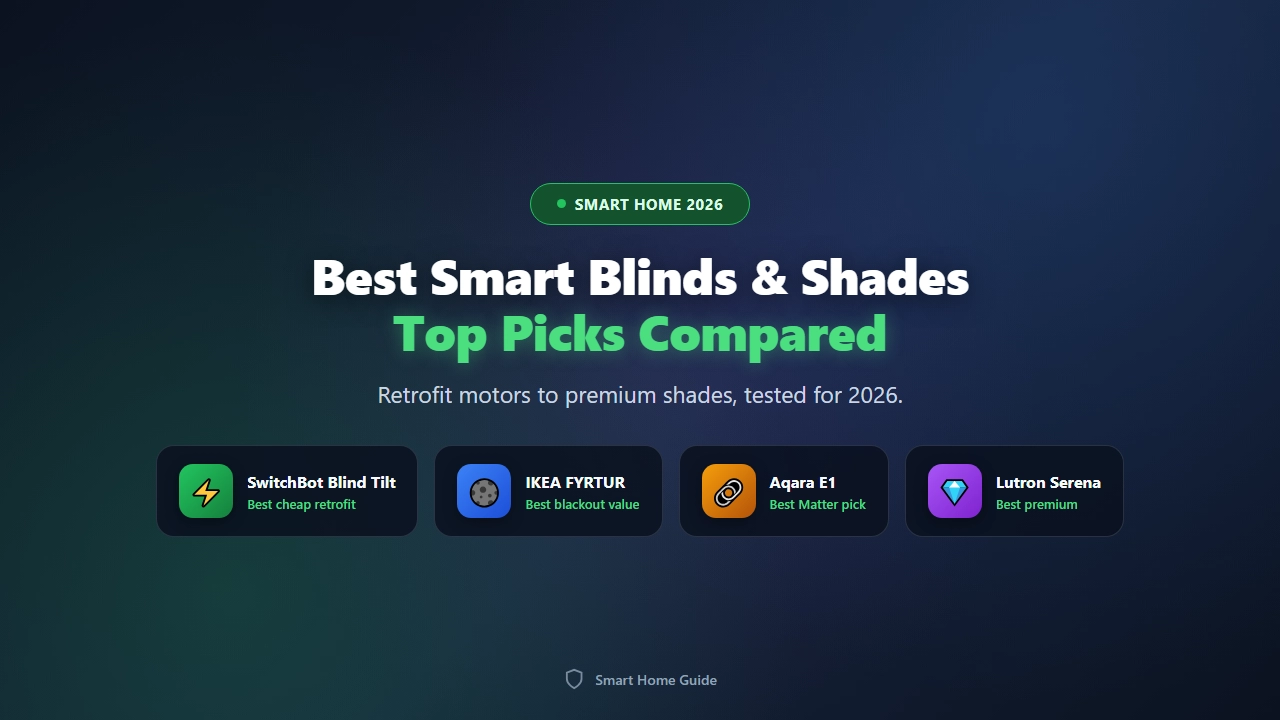
Smart blinds and shades have gone from a luxury gimmick to one of the most practical upgrades you can make to a home in 2026. They cut glare on your screens, keep rooms cooler in summer, wake you up with natural light, and quietly shave a little off your energy bill, all without you touching a cord. The best part is that you no longer need to replace every window or hire an electrician, because the current generation of motorized blinds and retrofit motors works with almost any window you already have.
This guide covers the best smart blinds and shades of 2026, from budget retrofit motors that clip onto your existing blinds to premium hard-wired shades that disappear into a smart home system. We focused on what actually matters: reliable motors, useful automation, broad ecosystem support (Matter, Alexa, Google Home, Apple HomeKit), and a price that makes sense for the size of the job.
Below you will find our top picks, a side-by-side comparison, a buy guide for choosing the right style, and a retrofit walkthrough if you would rather motorize the blinds you already own than buy new ones. No fake lab scores, no invented certifications, just a clear look at what each option does well and where it falls short.
The best smart blinds and shades of 2026
We grouped our picks by situation rather than by brand. If you want the cheapest way in, a retrofit motor is unbeatable. If you are fitting out a whole room or a new home, purpose-built motorized shades are cleaner and quieter.
| Product | Type | Best for | Ecosystem | Price (approx.) |
|---|---|---|---|---|
| SwitchBot Blind Tilt | Retrofit motor (horizontal blinds) | Motorizing existing venetian blinds cheaply | SwitchBot Hub (Matter, Alexa, Google, HomeKit via hub) | ~$70 |
| IKEA FYRTUR | Battery blackout roller shade | Affordable blackout for bedrooms | TRÅDFRI / Matter hub (Alexa, Google, HomeKit via hub) | ~$129 |
| Aqara Roller Shade Driver E1 | Retrofit roller motor | Quiet, Matter-native automation | Matter, Alexa, Google, HomeKit (Aqara hub) | ~$100 |
| Soma Smart Shades 2 | Retrofit motor (roller/honeycomb) | Existing roller and cellular shades | HomeKit, Alexa, Google, SmartThings | ~$149 |
| Yoolax Motorized Cellular Shades | Built-in motorized cellular shade | Insulation plus automation on a budget | Alexa, Google (hub optional), RF remote | ~$160 |
| Lutron Serena | Premium motorized shade | Whole-home, silent, design-forward | Caséta / RA3 (Alexa, Google, HomeKit, SmartThings) | ~$450+ |
SwitchBot Blind Tilt — best cheap retrofit
The Blind Tilt is a small solar-or-battery motor that clamps onto the tilt rod of existing horizontal (venetian) blinds. It rotates the slats open and closed on a schedule or by voice, and a light sensor can auto-close them when the sun hits the window. At roughly $70 it is the lowest-risk way to try motorized blinds, though it tilts rather than raises, so it is best for privacy and glare control rather than full blackout.
IKEA FYRTUR — best budget blackout roller
IKEA’s FYRTUR is a battery-powered blackout roller shade that blocks light almost completely, which makes it a standout for bedrooms and home theaters. It runs on the TRÅDFRI Zigbee system and pairs with most Matter hubs, so it drops neatly into Alexa, Google Home, or Apple Home. The trade-off is limited sizing and a slightly slower, louder motor than premium shades, but at around $129 the value is hard to beat.
Aqara Roller Shade Driver E1 — best Matter-native retrofit
The E1 is a retrofit motor that winds the bead chain of an existing roller shade, so it works with the shade you already own. It is one of the few retrofit drivers with native Matter support, meaning it connects directly to a Matter controller without proprietary lock-in. It is quiet and slim, and the battery lasts months, but it only fits chain-operated rollers, not cordless or venetian blinds.
Soma Smart Shades 2 — best for honeycomb and roller shades
Soma’s Smart Shades 2 is a tidy retrofit that turns a twist-rod or chain roller or cellular shade into a motorized one. It stands out for native Apple HomeKit support and a solar charger option, which keeps it off your ladder for battery changes. It is pricier than the Aqara and a touch slower in operation, but it covers more shade styles.
Yoolax Motorized Cellular Shades — best built-in value
If you would rather buy a shade that is motorized from the factory, Yoolax cellular shades are a strong budget pick. The honeycomb fabric adds real insulation (useful in both hot and cold climates), and the motor is rechargeable with an RF remote, with optional Alexa/Google bridges. Custom sizing is available, but the app and voice setup is less polished than the big brands.
Lutron Serena — best premium whole-home option
Lutron Serena is the option people install when they want motorized shades to simply disappear into the home. The motors are whisper-quiet, the fabric and hardware look genuinely premium, and the Caséta ecosystem is rock-solid with Alexa, Google, HomeKit, and SmartThings. The catch is price: a single shade often runs $450 or more, and a wired-in setup can climb fast.
How to choose the right smart blinds
Before you buy, answer four questions. They will narrow the field quickly.
1. Do you want to keep your current blinds? If your blinds are in good shape, a retrofit motor (SwitchBot, Aqara, Soma) is far cheaper than replacing them. If they are old, ugly, or the wrong size, buy motorized shades built from the factory.
2. What do you need the blind to do? “Smart” can mean tilt-only (great for glare and privacy) or raise-and-lower (better for blackout and views). Tilt motors are cheaper; full-raise motors cost more and need stronger batteries or wiring.
3. Which smart home system do you use? If you live in Apple HomeKit, prioritize Soma or Lutron. If you want open standards, look for Matter (Aqara, IKEA via hub). Most budget brands work with Alexa and Google through a bridge.
4. How many windows? One or two windows? A retrofit motor is perfect. A whole house? Factor in battery changes or step up to a wired/rechargeable system with a single app and hub.
Smart blind types compared
Understanding the three main categories saves you from buying the wrong thing.
Retrofit motors clip onto or drive your existing blinds. They are the cheapest entry point and require no measuring for new fabric, but they only automate what your current blind can already do.
Built-in motorized shades come as a complete product: fabric, tube, and motor. They look the cleanest and often offer blackout and cellular insulation options, but you pay more and must get the sizing right.
Hard-wired / professional shades (like Lutron Serena installed with power) are the quietest and most reliable long-term, with no batteries to charge, but they need wiring or at least a good rechargeable plan and a bigger budget.
How to retrofit your existing blinds (step by step)
If you go the retrofit route, the install is usually a 10-minute job. Here is the general flow:
Step 1: Confirm compatibility. Measure your blind’s tilt rod or chain type. Tilt motors need a standard horizontal blind wand or rod; chain drivers need a continuous bead chain. If your blind is cordless, a retrofit motor will not fit.
Step 2: Charge the motor. Most retrofit motors ship partially charged. Give them a full charge before mounting so you are not climbing back up next week.
Step 3: Mount it. Clip or strap the motor to the tilt mechanism or wrap its wheel onto the bead chain. Most use adhesive or a small bracket; the motor should sit level so the chain or rod turns smoothly.
Step 4: Pair the hub. Add the device in the manufacturer app, then bridge it to your smart home system (Matter, Alexa, Google, or HomeKit) through the hub.
Step 5: Automate. Set a sunrise/sunset schedule, a “good morning” scene that opens the blinds, and a “movie time” scene that closes them. Add a light or temperature trigger so the blinds close when the room gets too hot.
Smart home ecosystem compatibility
This is where a lot of buyers get stuck, so a quick map helps. Matter is the open standard that lets devices work across Alexa, Google, Apple, and Samsung without a brand-specific hub in many cases; Aqara and IKEA (via a Matter bridge) are the safest Matter bets. Apple HomeKit users should shortlist Soma and Lutron first. Alexa and Google Home users have the widest choice, including budget Yoolax and SwitchBot setups through their hubs. If you already run a Caséta or Aqara system, stay in that family to avoid juggling multiple apps.

Leave a Comment