
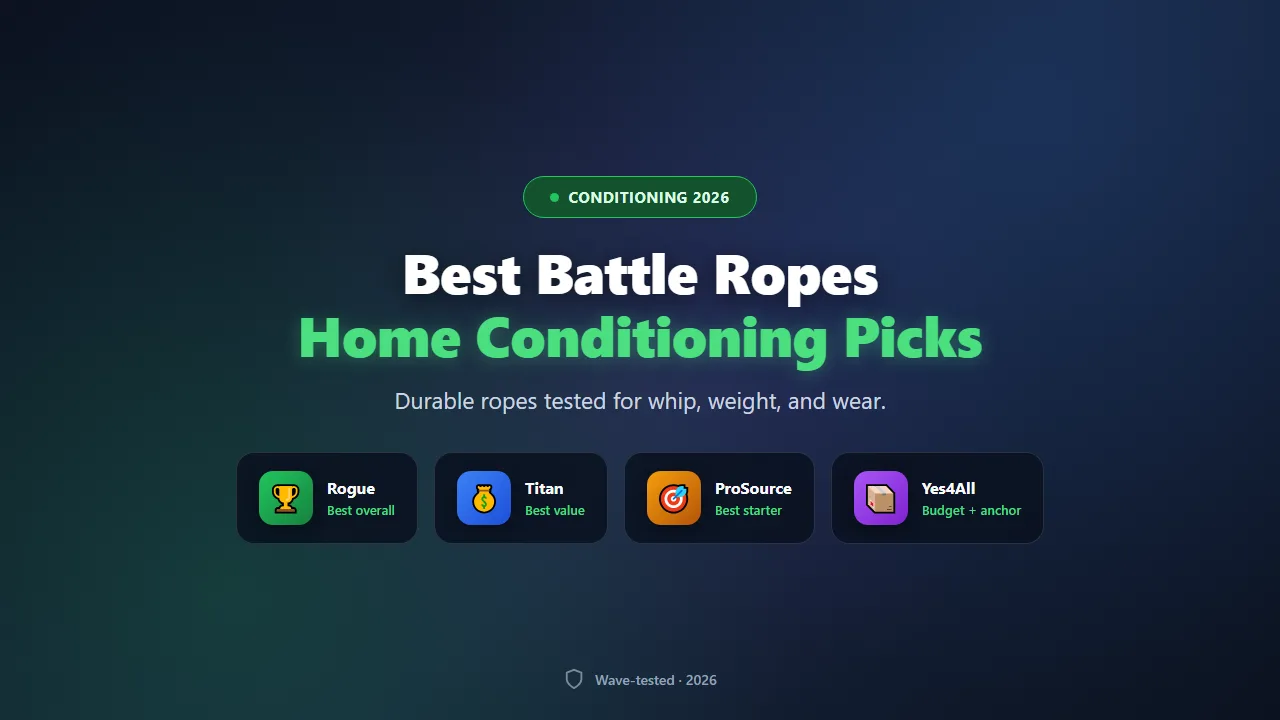
There is no subtle way to describe the first time you do battle ropes. Thirty seconds of alternating waves and your arms are on fire, your lungs are filing a complaint, and your brain has already started negotiating for an early finish. That brutal simplicity is the appeal. A rope, an anchor, and a patch of floor deliver conditioning that most machines cannot touch. Choosing the best battle rope 2026 has to offer comes down to length, thickness, and how the rope survives months of abuse.
We waved, slammed, and dragged five ropes from the budget end to the premium tier, testing them for whip speed, grip feel, and fiber shedding. We also checked which ones actually come with the hardware you need to use them. Whether you are planning a battle rope workout routine or trying to figure out the best battle rope length for your space, the answers are below.
Here is the layout: the comparison table, five full reviews, a buying guide on length and thickness, and the FAQ section.
The 5 best battle ropes of 2026 at a glance
All five ropes will give you a rude awakening on your first set. The differences are fiber quality, diameter, length, and whether an anchor is included.
| Product | Best for | Key specs | Price |
|---|---|---|---|
| Rogue Battle Rope | Best overall battle rope | 3/4 inch polyester, 30-50 ft, 100% virgin fiber | ~$100-$160 |
| Titan Fitness Battle Rope | Best value rope | 1.5 inch poly rope, 30-50 ft, UV resistant | ~$60-$100 |
| ProSource Battle Rope | Best starter rope | 1.5 inch, 30 ft, covered ends | ~$50 |
| Yes4All Battle Rope | Best budget with anchor | 1.5 inch poly, 30-50 ft, includes anchor strap | ~$45-$80 |
| Tidal Battle Rope | Best for outdoor use | Water-resistant core, 1.5 inch, 40 ft | ~$70 |
The 5 best battle ropes of 2026: full reviews
1. Rogue Battle Rope — Best overall battle rope
The Rogue rope is the one every gym owner buys, and it earns the reputation. It is made from 100 percent virgin polyester fiber, which means it is dense, snaps into waves with minimal effort, and lasts years with daily abuse. The standard 3/4 inch diameter whips fast, making it ideal for speed work, and the 30 to 50 foot lengths cover every home setup. At $100 to $160 it is the most expensive here, and new ropes shed a little fiber for the first few sessions before settling in. If you want the best battle rope 2026 has to offer, this is the benchmark.
| Pros | Cons |
|---|---|
|
|
Check today’s price on Amazon.
2. Titan Fitness Battle Rope — Best value rope
The Titan rope gives you the heavy-duty experience at about 60 percent of the Rogue price. It is a 1.5 inch poly rope in 30 to 50 foot lengths, and the thicker diameter means more grip work on top of the conditioning, which is genuinely harder and better for your forearms. The UV-resistant coating makes it a fine choice for garage and outdoor training. Around $60 to $100, it is the value pick of the category. The trade-offs: it is heavier to wave, so beginners will fatigue faster, and it sheds fibers over time, so keep it off carpets and sweep after sessions.
| Pros | Cons |
|---|---|
|
|
Check today’s price on Amazon.
3. ProSource Battle Rope — Best starter rope
The ProSource is the rope I recommend when someone wants to try battle rope training without committing $100. It is a 1.5 inch, 30 foot rope with covered ends that prevent fraying, and it costs about $50. The covered ends are a real feature, because cut rope ends are the first thing to unravel on budget ropes. It is lighter than the premium options, which is actually good for beginners learning the wave pattern, but it means the rope does not have the same whip as heavier fiber. It can also feel slippery when new. For a first rope, it is the right amount of commitment.
| Pros | Cons |
|---|---|
|
|
Check today’s price on Amazon.
4. Yes4All Battle Rope — Best budget with anchor
The Yes4All rope solves the problem most beginners do not know they have: how to anchor the thing. It includes an anchor strap in the box, which works around a squat rack, a heavy dumbbell, or a fence post, and that removes the biggest obstacle to actually using the rope. The rope itself is 1.5 inch poly in 30 to 50 foot lengths at $45 to $80, which is fair value for the length. The cut ends can fray, so wrap them with tape or heat-shrink when it arrives, and you will want grip chalk or gloves once your hands sweat. For a budget battle rope for home gym use, this is the complete package.
| Pros | Cons |
|---|---|
|
|
Check today’s price on Amazon.
5. Tidal Battle Rope — Best for outdoor use
The Tidal rope is built for people who train outside. The water-resistant core handles rain, humidity, and morning dew better than standard poly ropes, and the dense 1.5 inch, 40 foot construction produces a satisfying, heavy wave. At about $70, it sits in the middle of the price range. The density is the catch: it is heavier than expected, so it is not the rope for a first-time user, and because it is a smaller brand, customer support is thinner than the big names. If your setup is a backyard rig or an outdoor gym, this is the specialty pick that makes sense.
| Pros | Cons |
|---|---|
|
|
Check today’s price on Amazon.
How to choose the best battle rope (2026 buying guide)
Length, thickness, and anchor. Those three decisions are the whole game.
Length is about your space first. Thirty feet suits most home gyms and beginners, because it gives you enough rope for waves and slams without needing a warehouse. Forty to fifty feet gives more room for slams and longer waves, but you need the floor space to lay it out. Measure your training area before you buy, and remember the rope needs to lie flat on both sides.
Thickness changes the workout. The 1.5 inch diameter is the standard for general conditioning and grip work. Two inch ropes are heavier and brutally hard on the forearms. The 3/4 inch Rogue style whips faster and is better for speed and endurance work. Thicker is not better, it is just different, and beginners should start thinner.
Do not skip the anchor. Every rope needs something solid to attach to: a wall anchor, a heavy dumbbell, or an anchor strap around a squat rack. The Yes4All includes a strap, which is why it is the easiest first purchase. If your rope does not come with one, buy a strap separately or you will spend your sessions improvising.
Set realistic expectations. Battle ropes build muscular endurance and conditioning more than size. For muscle growth, treat them as a finisher after strength work, not a replacement for lifting. Thirty seconds on, thirty seconds off, for five rounds, is a brutal and honest introduction.
Protect your floor and your hands. Ropes shed fibers, so train on a mat or garage floor, and use chalk or gloves once you sweat. A battle rope for home gym use will shed no matter the brand, that is physics, but a little prep keeps the mess manageable.
If you are building out a conditioning corner, battle ropes and a jump rope cover very different jobs and complement each other perfectly. The best jump ropes of 2026 are ideal for quick warm-ups, while the heavy rope is your finisher. And if you are wondering how much cardio you actually need, the CDC’s physical activity guidelines for adults are the standard reference.






Leave a Comment