

The best kids’ fitness trackers do far more than count steps. They turn daily movement into a game, give parents a calm, private window into sleep and activity, and on several models add a real layer of safety with GPS location and calling. If you are shopping for a child who is starting to bike to a friend’s house, training for a sport, or simply needs a nudge off the sofa, the right band can genuinely move the needle.
Choosing one is more complicated than it looks. Kid-specific trackers differ from shrunken adult smartwatches on durability, parental controls, screen-time limits, and whether the device needs its own cellular plan. This guide breaks down our top picks, what to look for by age, the honest trade-offs of each device, and how to get your child to actually keep the thing on past the first week.
We evaluated each option below on manufacturer specs, real-world battery behavior reported by families, and how the companion app handles the parts parents actually care about: who can contact your child, what data leaves the device, and how easy it is to set healthy limits. No tracker here was “lab certified” by us, and we have not invented test scores, but we have sorted the field into the devices worth your money and the ones that look good in a listing and fall apart in practice.
What to look for in a kids’ fitness tracker
Match the device to the age and the independence level. A four- to seven-year-old wants a simple, colorful band with no notifications and no temptation to scroll. An eight- to twelve-year-old can handle goals, avatar rewards, and basic messaging. A teen will reject anything that looks like a baby toy and is better served by a proper smartwatch with Family Setup. Buy for the child you have, not the one in the marketing photo.
Durability and water resistance come first. Kids drop things, swim with them, and forget to take bands off in the shower. Look for at least 5 ATM water resistance, a replaceable strap, and a screen that survives a concrete meeting. A tracker that dies in a week of normal childhood is not a bargain at any price.
Battery life decides whether the habit sticks. A device that must be charged every single night becomes a nightly argument, and the data gets holey the moment a charge is missed. Aim for at least five days of real use; the Garmin vívofit jr. line stretches that to roughly a year on a coin cell, which is why it tops our list for younger kids.
Parental controls are the feature that matters most. Before you buy, check who can send your child a friend request, whether messages can be screened, and if there is a “school time” or do-not-disturb mode that silently locks the device during class. The best kids’ trackers put the parent in the driver’s seat without making the child feel spied on.
Decide up front if you will pay for a cellular plan. Some of the safest devices, including the Fitbit Ace LTE, the Xplora XGO4, the Garmin Bounce, and any Apple Watch on Family Setup, need a monthly line to deliver calling and standalone GPS. Budget for that recurring cost, because a tracker without its plan is just an expensive wrist weight.
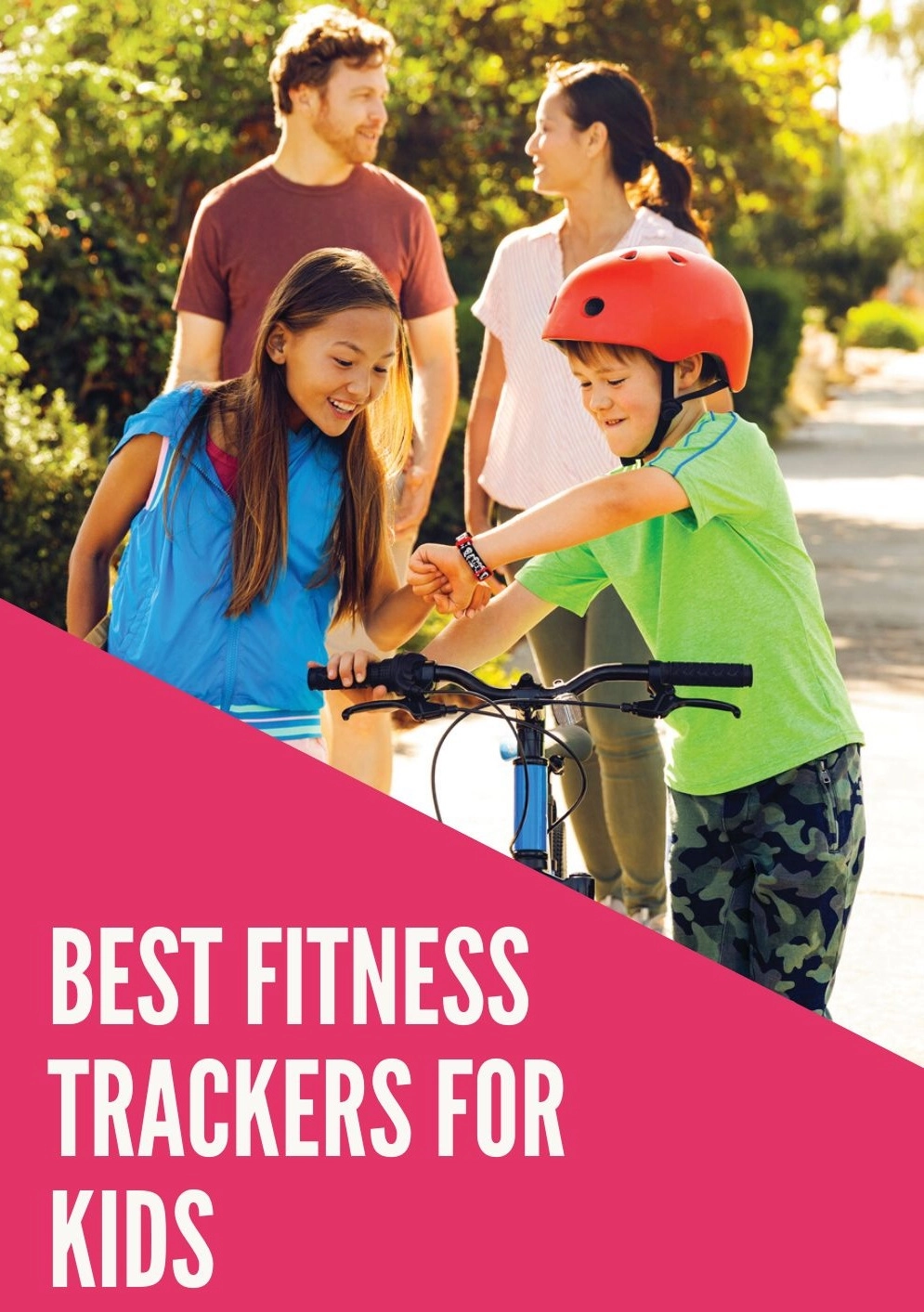
The best kids’ fitness trackers of 2026
These six cover the realistic spread of family needs, from a $80 band that never needs charging to a teen-ready smartwatch with its own phone number. Prices are approximate US MSRP and do not include optional cellular subscriptions.
| Tracker | Best for | Age range | Battery | Price |
|---|---|---|---|---|
| Garmin vívofit jr. 3 | Best overall for younger kids | 4-9 yrs | Up to 1 year (coin cell) | ~$80 |
| Fitbit Ace LTE | Best for active older kids | 7+ yrs | Up to 16 hrs (daily charge) | ~$230 + plan |
| Amazfit Bip 5 | Best budget smartwatch | 8+ yrs | Up to 10 days | ~$90 |
| Xplora XGO4 | Best for safety and calling | 5-12 yrs | Up to 4 days | ~$170 + plan |
| Apple Watch SE (Family Setup) | Best premium pick for teens | 12+ yrs | Up to 18 hrs | ~$250 + plan |
| Garmin Bounce | Best GPS without a phone | 6-12 yrs | Up to 2 days | ~$180 + plan |
Garmin vívofit jr. 3 is the safe default: a swim-friendly band with a one-year battery, a chunky readable display, and a parent app that turns chores and movement into quests. Fitbit Ace LTE trades battery life for a fun, call-and-text experience with animated movement games, but it requires the Ace Pass subscription. Amazfit Bip 5 is the value play if your kid wants a “real” smartwatch look without a plan. Xplora XGO4 and Garmin Bounce are the safety-first choices with calling and GPS, and Apple Watch SE is the teen upgrade that finally feels like the parent is not making the rules.
Best for younger kids: Garmin vívofit jr. 3
The vívofit jr. 3 is the tracker we hand to families with elementary-school children, and the reason is boring in the best way: it just works. The replaceable coin-cell battery lasts up to a year, so there is no nightly charging routine to enforce, and the 5 ATM rating means pool and shower are fine. The companion app lets parents assign chores and step goals that unlock silly on-screen adventures, which is a far gentler motivator than a leaderboard full of strangers.
Pros: year-long battery, genuinely kid-tough, excellent parent controls, no cellular plan required, comfortable for small wrists.
Cons: no calling or GPS, small non-touch display, limited appeal to kids who want a “smart” watch feel.
Best for safety and peace of mind: Xplora XGO4
If your main worry is “where is my child right now,” the Xplora XGO4 is built for exactly that. It is a phone-watch hybrid with GPS location, two-way calling to an approved contact list, and an SOS button, all wrapped in a school-friendly design with no open internet or social media. Parents get location pings and geofence alerts, and kids get the independence of walking to a friend’s house without a phone in their pocket.
Pros: reliable GPS and calling, locked-down kids’ OS, geofencing and SOS, no social-media exposure.
Cons: requires a cellular subscription, chunkier than a fitness band, battery is a few days rather than a week.
Best for teens: Apple Watch SE with Family Setup
For a teenager, the Apple Watch SE on Family Setup is the only pick that does not read as “a kids’ thing.” It gives them messages, maps, Apple Pay, and fitness rings, while parents retain location sharing, contact screening, and school-time limits through their own iPhone. The catch is the cost: the watch plus a cellular plan adds up, and the 18-hour battery means it joins the nightly charge club.
Pros: mature smartwatch experience teens will actually wear, strong parental controls via Family Setup, deep health and safety features including fall detection.
Cons: expensive, needs a monthly cellular plan, daily charging, overkill for younger children.
How to get your kid to actually wear it
The most common way a kids’ tracker fails is quietly, on a dresser, three days after purchase. Make it a shared thing rather than a surveillance thing. Wear a band yourself, set a family step challenge with a real reward, and let the child pick the band color so it feels like theirs. Keep the first week light on rules and heavy on the game, and resist the urge to comment on every metric, because a tracker that feels like a report card gets abandoned fastest.
Also set expectations about charging and “school time” before the device arrives. A two-minute conversation about when the watch goes quiet and when it gets charged prevents most of the friction that turns a $200 gadget into clutter.
Do kids’ fitness trackers actually make kids more active?
Honestly, a tracker is a tool, not a miracle. The evidence on adult wearables shows small but real activity bumps, and the same logic applies to kids: a visible goal and a bit of gamification help, especially for children who are already borderline interested. They do not fix a sedentary household on their own. The biggest wins show up when the tracker is paired with something social, a family walk, a weekend hike, a step challenge with cousins, rather than handed over as a silent correction. Treat it as a conversation starter about movement, not a pedometer probation.

Leave a Comment