Bird Dog Exercise Muscles Worked to Build a Strong Foundation
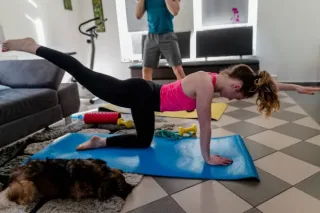
Get ready to soar to new Fitness heights with the bird dog Exercise Muscles worked! This dynamic move might sound whimsical, but trust us, it’s anything but. The bird-dog exercise not only targets multiple muscle groups simultaneously but also helps build a strong foundation for your overall fitness journey.
Table of Contents
- What is the bird dog exercise?
- Muscles worked during the bird-dog exercise
- Benefits of the Bird Dog Exercise Muscles Worked
- Proper form and technique for the bird dog exercise
- Bird dog modifications for different fitness levels
- Incorporating it into your workout routine
- Common mistakes to avoid while doing the bird dog exercise
- Bird dog exercise variations for added challenge
- Combining the bird dog exercise with other core exercises
The bird-dog exercise is an excellent way to improve stability, balance, and posture because it strengthens your shoulders, glutes, back muscles, and core. You engage your deltoids, erector spinae, and deep abdominal muscles when you consciously extend one arm and the opposing leg. This improves body awareness and coordination while also reducing the risk of lower back pain and injuries.
And that’s not all—the bird dog exercise provides an excellent opportunity to strengthen and tone your glutes. By squeezing your glutes at the top of each repetition, you can sculpt a shapely backside.
So spread those wings and add the bird-dog exercise to your fitness routine. You’ll be amazed at the transformation it brings to your body and overall well-being.
What is the bird dog exercise?
The bird dog exercise is a simple yet effective movement that mimics the position of a bird dog pointing at its prey. It involves getting down on all fours, with your hands directly under your shoulders and your knees directly under your hips. From this starting position, you’ll extend one arm forward while simultaneously extending the opposite leg backward.
This creates a straight line from your fingertips to your toes. Hold this position for a few seconds before returning to the starting position and repeating on the other side. The bird dog exercise can be performed on a yoga mat or any comfortable surface.
This exercise is often recommended by fitness professionals and physical therapists for its ability to engage and strengthen multiple muscle groups simultaneously. It’s a versatile movement that can be modified to suit individuals of all fitness levels, making it suitable for beginners and advanced athletes alike.
The bird-dog exercise is not only beneficial for your physical health but also for your mental well-being. It requires focus and concentration to maintain proper form and balance, which helps improve mindfulness and body awareness.
Muscles worked during the bird-dog exercise
The bird dog exercise is a full-body movement that targets various muscle groups. Understanding which muscles are worked during this exercise can help you better appreciate its benefits and incorporate it into your fitness routine.
Core muscles
The rectus abdominis, transverse abdominis, and obliques are among the core muscles that are principally worked during the bird-dog exercise. These muscles are in charge of maintaining proper posture, supporting the spine, and avoiding lower back pain.
Shoulder muscles
As you extend your arm forward during the bird dog exercise, your deltoids, which are the muscles at the top of your shoulders, are engaged. This helps strengthen and stabilize the shoulder joints.
Glutes
The bird dog exercise is excellent for activating and toning the gluteal muscles. When you extend your leg backward, the gluteus maximus, medius, and minimus are all recruited to maintain balance and stability.
Back muscles
The erector spinal muscles, which run along the spine, are engaged during the bird dog exercise to maintain a neutral spine position. Additionally, the muscles in the upper and mid-back are also worked, helping to improve overall back strength and posture.
By targeting these key muscle groups, the bird-dog exercise helps create a strong and stable foundation for your entire body.
Benefits of the Bird Dog Exercise Muscles Worked
The bird dog exercise offers numerous benefits for individuals of all fitness levels. Whether you’re a beginner looking to improve stability or an athlete aiming to enhance performance, incorporating this exercise into your routine can yield significant results. Here are some of the key benefits of the bird-dog exercise:
Improved core strength
As mentioned earlier, the bird dog exercise primarily targets the core muscles, which play a crucial role in providing stability and support to the spine. By regularly performing this exercise, you can strengthen your core muscles, leading to better posture, reduced lower back pain, and improved overall functional strength.
Enhanced stability and balance
The bird-dog exercise requires maintaining a stable position while extending the arm and leg. This challenges your balance and proprioception, which is your body’s ability to sense its position in space. By regularly practicing the bird-dog exercise, you can improve your stability and balance, making everyday activities and other exercises easier and safer.
Injury prevention
The bird dog exercise helps strengthen the muscles surrounding the spine, including the erector spinae. A strong back can provide better support and stability to the spine, reducing the risk of injuries, especially in the lower back area. Additionally, the bird dog exercise promotes proper alignment and posture, further minimizing the chances of injury.
Improved posture
Poor posture is a common issue in today’s sedentary lifestyle. The bird dog exercise can help counteract the negative effects of sitting for extended periods by strengthening the muscles that support proper posture. As your core and back muscles become stronger, they can better support your spine, leading to improved posture and reduced strain on your neck and shoulders.
Increased body awareness
The bird dog exercise requires focus and concentration to maintain proper form and balance. By practicing this exercise regularly, you can develop a better sense of body awareness, allowing you to move more efficiently and effectively in other activities.
Glute activation and toning
The bird dog exercise provides an excellent opportunity to target and tone your glute muscles. By consciously squeezing your glutes at the top of each repetition, you can activate and strengthen these muscles, leading to a firmer and shapelier backside.
The bird dog exercise offers a wide range of benefits that can improve both your physical and mental well-being. Whether you’re looking to strengthen your core, improve stability, or enhance posture, incorporating this exercise into your routine can help you achieve your fitness goals.
Proper form and technique for the bird dog exercise
To maximize the benefits and effectiveness of the bird dog exercise, it’s essential to maintain proper form and technique. Follow these steps to perform the exercise correctly:
1. Start by getting down on all fours, with your hands directly under your shoulders and your knees directly under your hips. Ensure that your wrists are aligned with your shoulders and your fingers are pointing forward.
2. Engage your core muscles by pulling your belly button towards your spine. This will help stabilize your spine and maintain proper alignment throughout the exercise.
3. Extend your right arm forward, parallel to the ground, while simultaneously extending your left leg backward, parallel to the ground. Keep your arm and leg straight and in line with your body. Avoid lifting them too high or arching your back.
4. Hold this position for a few seconds, focusing on maintaining stability and balance. Imagine reaching your fingertips and toes away from each other, creating a straight line.
5. Slowly lower your arm and leg back to the starting position. Repeat the movement on the other side by extending your left arm forward and your right leg backward.
6. Continue alternating sides for the desired number of repetitions or duration.
Remember, quality is more important than quantity when performing the bird dog exercise. Focus on maintaining proper form and engaging the targeted muscles throughout each repetition. If you feel any pain or discomfort, stop and consult with a qualified fitness professional or healthcare provider.
Bird dog modifications for different fitness levels
The bird-dog exercise can be modified to suit individuals of all fitness levels. Whether you’re a beginner or an experienced athlete, there’s a variation that can challenge you appropriately. Here are some modifications you can try:
Beginner modification
If you’re new to the bird dog exercise or have limited core strength, you can start by performing the exercise on your knees instead of your toes. Get down on all fours, with your hands directly under your shoulders and your knees directly under your hips. From this position, extend one arm forward and the opposite leg backward, focusing on maintaining stability and balance. This modification reduces the load on the core muscles, making it more accessible for beginners.
Advanced modification
For those looking to increase the challenge of the bird dog exercise, you can incorporate resistance bands or weights. Attach a resistance band around your feet or ankles, and perform the exercise as usual. The resistance provided by the band will engage your muscles further, making the exercise more challenging. Alternatively, you can hold a dumbbell or kettlebell in your hand while performing the exercise to increase the load on your muscles.
Unilateral modification
To further challenge your stability and balance, you can perform the bird dog exercise unilaterally. Instead of extending one arm and the opposite leg simultaneously, focus on isolating each side. Extend one arm forward and hold for a few seconds before returning it to the starting position. Repeat the movement on the other side with the opposite arm. This modification requires greater control and coordination, making it suitable for those with intermediate to advanced fitness levels.
Remember to choose the modification that suits your current fitness level and gradually progress as you become more comfortable and stronger. It’s always better to start with a modification that allows you to maintain proper form and technique rather than pushing yourself too hard and risking injury.
Incorporating it into your workout routine
Now that you understand the benefits and proper form of the bird dog exercise, let’s explore how you can incorporate it into your workout routine. The frequency and duration of performing the bird dog exercise will depend on your overall fitness goals and current fitness level. Here are some suggestions:
Stand-alone exercise
If you’re looking to specifically target your core and stability, you can perform the bird dog exercise as a stand-alone exercise. Begin with a few sets of 10–12 repetitions on each side. As you become more comfortable and stronger, you can increase the number of sets or repetitions.
Warm-up
The bird dog exercise is an excellent warm-up exercise that activates and mobilizes multiple muscle groups. Perform a few sets of bird dog exercises before starting your main workout to prepare your body for movement and improve overall stability.
Superset
Pair the bird dog exercise with another core exercise to create a superset. For example, perform a set of bird dog exercises immediately followed by a set of plank exercises. This combination will challenge your core muscles from different angles and intensify the overall workout.
Circuit training
Include the bird dog exercise in a circuit training routine that targets different muscle groups. Alternate between the bird dog exercise and exercises for other body parts to create a well-rounded and challenging workout.
Remember to listen to your body and adjust the intensity and duration of the bird dog exercise according to your fitness level. It’s always better to start with a lighter workload and gradually progress as you become more comfortable and stronger.
Common mistakes to avoid while doing the bird dog exercise
To reap the full benefits of the bird-dog exercise and prevent injuries, it’s important to be aware of common mistakes and avoid them. Here are some common mistakes to watch out for:
Arching the back
One of the most common mistakes during the bird dog exercise is arching the back excessively. It’s crucial to maintain a neutral spine throughout the movement. Avoid lifting your arm and leg too high, as this can cause your lower back to arch. Focus on extending your arm and leg in a controlled manner, keeping them in line with your body.
Rounding the shoulders
Another mistake to avoid is rounding the shoulders. When extending your arm forward, ensure that your shoulder remains stable and doesn’t collapse. Keep your shoulder blades engaged and down, maintaining a strong and stable upper body.
Holding the breath
Many people tend to hold their breath while performing the bird dog exercise or other core exercises. This can lead to increased tension and reduced stability. Remember to breathe naturally throughout the exercise, inhaling during the starting position and exhaling during the extension phase.
Lack of core engagement
The bird dog exercise is primarily a core exercise, so it’s essential to engage your core muscles throughout the movement. Focus on pulling your belly button towards your spine, activating your deep abdominal muscles. This will help stabilize your spine and maintain proper alignment.
Rushing the movement
To fully benefit from the bird-dog exercise, it’s important to perform it in a controlled manner. Avoid rushing through the exercise or using momentum to lift your arm and leg. Instead, focus on the quality of each repetition, maintaining stability and balance throughout.
By being mindful of these common mistakes and focusing on proper form and technique, you can ensure that you’re maximizing the effectiveness of the bird-dog exercise and minimizing the risk of injury.
Bird dog exercise variations for added challenge
If you’re looking to add variety and challenge to your bird dog exercise routine, here are some variations you can try:
Bird dog with a twist
Perform the bird dog exercise as usual, but when you extend your arm forward, simultaneously rotate your torso to the side. This added twist engages the oblique muscles and challenges your core stability further.
Bird dog with knee tucks
Start in the traditional bird dog position. Instead of extending your leg backward, bring your knee towards your chest, engaging your abdominal muscles. Return your leg to the starting position and repeat on the other side. This variation increases the activation of your core muscles and adds a cardiovascular element to the exercise.
Bird dog with a resistance band
Attach a resistance band around your feet or ankles and perform the bird dog exercise as usual. The resistance provided by the band adds an extra challenge to your glutes and core muscles.
Bird dog with a stability ball
Place a stability ball under your hips and perform the bird dog exercise on top of it. This variation increases instability, forcing your core and glute muscles to work harder to maintain balance.
Remember to incorporate these variations gradually and only when you feel comfortable and confident with the traditional bird dog exercise. Always prioritize proper form and technique over the level of difficulty.
Combining the bird dog exercise with other core exercises
While the bird dog exercise is an excellent standalone exercise, it can also be combined with other core exercises to create a comprehensive core workout. Here are some exercises that complement the bird-dog exercise:
Plank
The plank exercise targets the entire core, including the rectus abdominis, transverse abdominis, obliques, and lower back muscles. By combining the bird dog exercise with planks, you can engage and strengthen your core from different angles. Start with a traditional plank, holding the position for a set amount of time, and then perform the bird dog exercise. Alternate between the two exercises for a challenging core workout.
Russian twists
Sit on the floor with your knees bent and your feet flat. Lean back slightly and twist your torso from side to side, using your core muscles to control the movement.
Woodchoppers
Stand with your feet shoulder-width apart and hold a weight in your hands. Rotate your torso and swing the weight down diagonally across your body, as if chopping wood.
Plank with alternating leg lifts
Start in a high plank position, then alternate lifting one leg off the ground at a time.
Pallof press
Stand with a resistance band attached to an anchor point at chest height. Hold the band in both hands and press it away from your body, resisting the rotation it creates.
Deadbugs
Lie on your back with your knees bent and your feet flat on the floor. Extend one arm and the opposite leg straight out at the same time, then lower them back down. Repeat on the other side.
Mountain climbers
Start in a high plank position, then alternate bringing your knees towards your chest in a running motion.
Choose exercises that match your fitness level and gradually increase difficulty as you get stronger. Focus on proper form over speed or weight. Breathe smoothly and continuously throughout the exercises. Listen to your body and take rest days when needed.
References:
| Variation | What changes | Primary benefit |
|---|---|---|
| Traditional bird dog | Extend opposite arm and leg from all fours | Core stability, balance, posture |
| Beginner on knees | Perform on knees instead of toes | Reduces core load, more accessible |
| Advanced with resistance band or weight | Add a band or hold a dumbbell | More challenge for glutes and core |
| Unilateral arm only | Isolate one arm, hold, then switch | Greater control and coordination |
| Bird dog with a twist | Rotate the torso on extension | Engages obliques, extra core challenge |
| Bird dog with knee tucks | Bring the knee toward the chest | Adds a cardio and core element |
| Bird dog with a stability ball | Place the ball under the hips | Increases instability, harder balance |
Frequently Asked Questions
What muscles does the bird dog exercise work?
Is the bird dog exercise good for beginners?
Does the bird dog help with lower back pain?
How do I perform the bird dog correctly?
How often should I do the bird dog exercise?
Can I combine the bird dog with other core exercises?
The bottom line
The bird dog is a simple, low risk core exercise that strengthens several muscle groups at once, including your core, shoulders, glutes, and back, which improves stability, balance, posture, and body awareness while protecting the lower back. Start with the traditional version and pick the modification or variation that fits your level, then progress gradually and pair it with other core moves for a well rounded routine.

James Mitchell
James Mitchell is a certified personal trainer (NASM-CPT) and the lead fitness editor at Smart Life Hubs. With 12 years coaching home and gym athletes, he specialises in bodyweight and strength training, running form, and fat-loss science. His training plans and equipment reviews are backed by real test sessions, not spec sheets.





Leave a Comment