
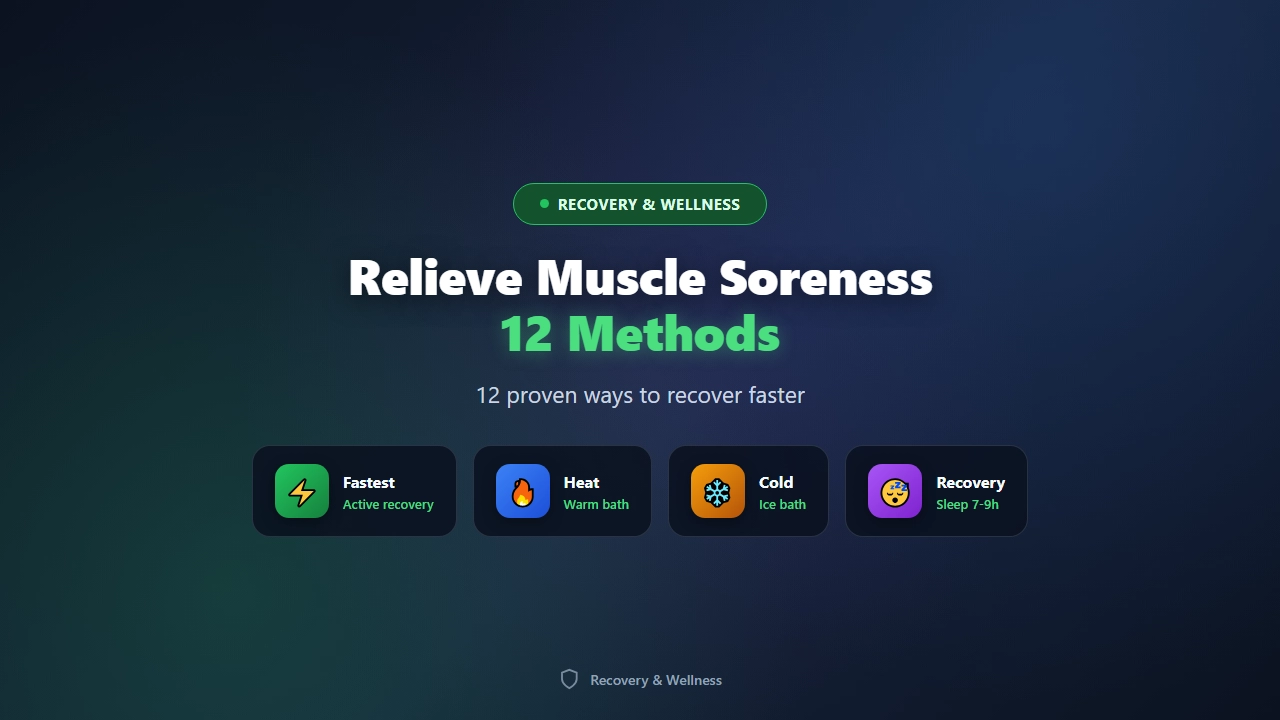
Muscle soreness after a tough workout is annoying, but it is also a sign your body is adapting and getting stronger. The problem is when that ache keeps you off the gym floor for days or makes everyday movement miserable. If you want to know how to relieve muscle soreness fast, the good news is that the methods that actually work are simple, cheap, and backed by sports-science research rather than gym myths.
Delayed onset muscle soreness, or DOMS, is the stiff, tender feeling that peaks around 24 to 72 hours after unfamiliar or intense exercise. It is caused by tiny microscopic tears in the muscle fibers and the resulting low-grade inflammation, not by “lactic acid” sitting in your muscles, which clears within an hour of training. Understanding that distinction matters, because it tells you which remedies are real and which are wishful thinking.
This guide breaks down 12 proven methods to relieve muscle soreness faster, organized by how quickly they work and how much effort they require. None of them are magic, but used together they can shave a day or two off your recovery and get you back to training consistently, which is what actually drives results.
What muscle soreness really is (and why it shows up)
Before fixing soreness, it helps to know what you are dealing with. DOMS is most intense after eccentric exercise, the part of a movement where the muscle lengthens under load, such as the lowering phase of a squat, running downhill, or lowering a dumbbell during a biceps curl. The unfamiliar stress creates micro-damage, and your immune system responds with inflammation to begin repair. That repair process is what makes the muscle stronger and more resilient next time.
The takeaway is important: soreness itself is not the goal. You can build muscle and get fit without being cripplingly sore. But when soreness does show up, the methods below help you manage it so it does not derail your routine. A useful rule of thumb is that mild soreness that eases as you warm up is fine; sharp pain that worsens with movement is an injury and should be rested, not pushed through.
The fastest ways to relieve muscle soreness
1. Do active recovery instead of total rest. The single best thing for sore muscles is gentle movement. A 20 to 30 minute walk, easy cycling, or light swim increases blood flow to the damaged tissue and helps clear metabolic byproducts. Complete couch-lock actually makes muscles stiffer. Keep the intensity at a level where you could hold a conversation the whole time.
2. Foam roll the sore areas. Self-myofascial release with a foam roller or massage ball temporarily reduces soreness and improves short-term range of motion. Roll slowly over each sore muscle for 30 to 60 seconds, breathing through the discomfort. It will not “break up scar tissue,” but it does calm the nervous system and increase circulation to the area.
3. Apply heat. A warm bath, heating pad, or sauna raises tissue temperature and boosts blood flow, which eases stiffness and makes muscles feel looser. Heat is best used a day or two after the workout, once the initial acute inflammation has calmed down. For immediate post-workout relief, many people prefer the contrast approach below.
4. Use cold water immersion. Cold plunges, ice baths, or even a cool shower can blunt inflammation and numb soreness, which is why athletes have used them for decades. The evidence is mixed on whether cold helps long-term muscle growth, so if your main goal is building muscle, save cold exposure for your hardest sessions rather than every workout. For pure soreness relief, it works.
5. Get a massage or use a massage gun. Both increase circulation and reduce the perception of soreness. A professional sports massage is ideal, but a percussive massage device used for a minute or two per muscle group is a solid at-home alternative. Avoid digging aggressively into a brand-new injury; keep it firm but comfortable.
The nutrition methods that speed recovery
6. Eat enough protein. Your muscles literally rebuild themselves from the protein you eat. Aim for roughly 0.7 to 1 gram of protein per pound of bodyweight daily, spread across meals. A post-workout meal or shake with 20 to 40 grams of protein supplies the amino acids your damaged fibers need to repair.
7. Drink tart cherry juice. Several studies have found that tart cherry juice, rich in anthocyanin antioxidants, reduces muscle soreness and strength loss after hard exercise. The typical protocol is about 8 to 12 ounces twice a day for a few days around your training. It will not erase soreness, but the reduction is measurable.
8. Stay hydrated. Dehydrated muscles recover more slowly and feel tighter. Water supports every metabolic process involved in repair. A simple target is pale-yellow urine and steady sipping through the day, with extra fluids on hot training days or long sessions.
9. Add omega-3s and anti-inflammatory foods. Fatty fish, walnuts, flaxseed, and colorful fruits and vegetables supply compounds that gently reduce exercise-induced inflammation. You do not need supplements to benefit, but a daily source of omega-3 fat is a reasonable insurance policy for anyone training hard multiple times per week.
The lifestyle methods that keep soreness from lingering
10. Prioritize sleep. Sleep is when most tissue repair and hormone release happens. Adults who sleep 7 to 9 hours recover faster and report less soreness than those who shortchange rest. If you train hard, protecting your sleep is the highest-leverage recovery tool you have.
11. Do gentle stretching and mobility work. Light static stretching or a slow mobility routine increases range of motion and reduces the “bound up” feeling. Do not bounce or force a stretch on an acutely sore muscle; ease into it and hold for 20 to 30 seconds. The goal is to feel a gentle pull, never pain.
12. Try compression garments or an Epsom salt bath. Graduated compression leggings can reduce swelling and the perception of soreness during and after exercise for some people. An Epsom salt bath, meanwhile, is mostly relaxing, and relaxation lowers perceived pain. The magnesium absorption story is overstated, but as a wind-down ritual it earns its place.
How the methods compare
Not every method works at the same speed or for the same person. Here is a quick, honest comparison to help you choose what to try first when you are stiff and short on time.
| Method | How fast it works | Best for | Effort / cost |
|---|---|---|---|
| Active recovery walk | Immediate (during/after) | Whole-body stiffness | Low / free |
| Foam rolling | Within an hour | Targeted tight spots | Low / one-time buy |
| Heat or warm bath | 20 to 40 minutes | Next-day stiffness | Low / free |
| Cold water immersion | Immediate numbing | Acute post-workout ache | Medium / setup |
| Tart cherry juice | 1 to 2 days of use | Reducing overall soreness | Low / recurring cost |
| Sleep (7 to 9 hrs) | Overnight | Long-term recovery | Low / free |




Leave a Comment