
A massage gun looks simple: point it at a sore muscle, pull the trigger, and relax. But the people who get the most from these devices are the ones who understand the attachments, the settings, and the mistakes that everyone makes. Used correctly, a percussion massager genuinely helps with muscle recovery, soreness, and tightness. Used badly, it can bruise you, aggravate an injury, and waste your time.
This guide covers how to use a massage gun the right way, from picking the right attachment to setting the right speed, and the mistakes to avoid.
What a massage gun does
A massage gun delivers rapid, percussive pulses deep into your muscle tissue. The head moves back and forth several times a second, and this rapid impact helps to relax tight muscles, improve blood flow, and reduce the perception of soreness. It is not a cure-all, but it is a genuinely useful recovery and relaxation tool when used properly.
The key insight is that it works best as a complement to stretching, movement, and rest, not as a replacement. It can loosen you up, but it does not fix the underlying cause of tightness or soreness.
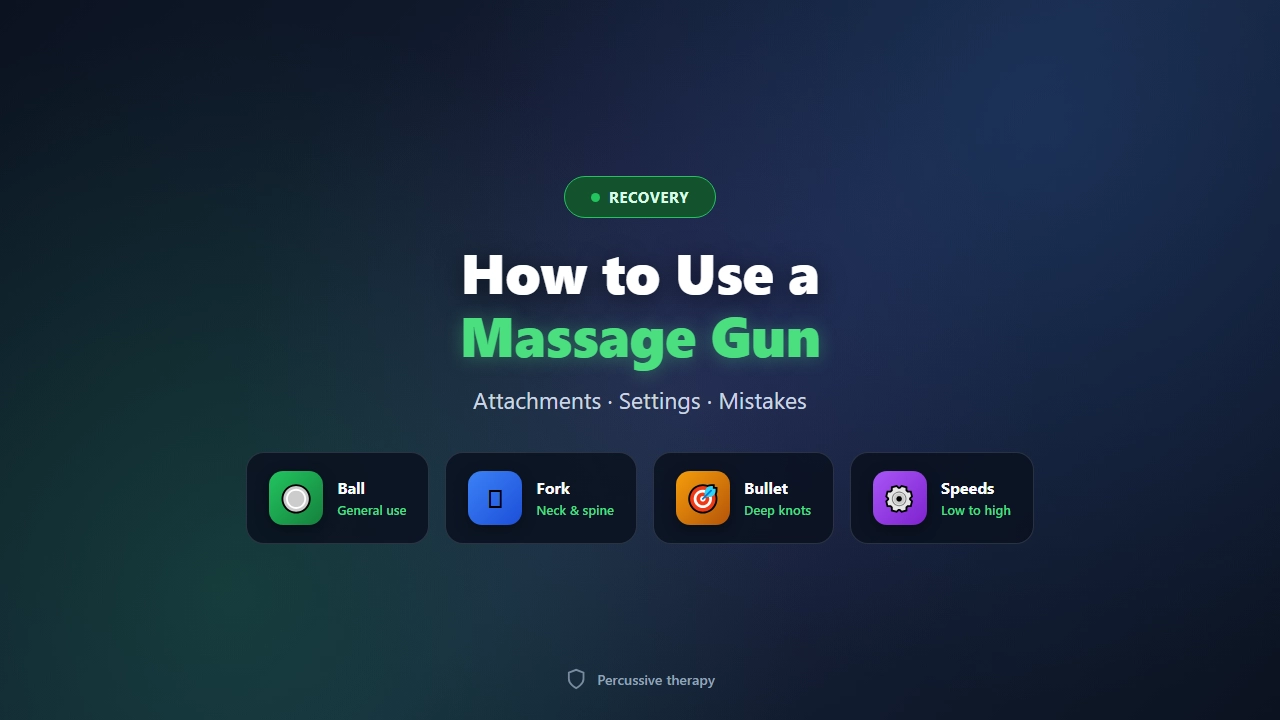
The attachments and what they are for
The attachments are not just different colors, each one is designed for a specific purpose. Using the right attachment makes a huge difference to how effective and comfortable the session is.
| Attachment | Shape | Best for |
|---|---|---|
| Ball | Round | General use, large muscle groups |
| Flat | Flat disc | Bony areas, spine, broad coverage |
| Fork | U-shaped | Neck, spine, Achilles tendon |
| Bullet | Pointed | Deep knots, trigger points, feet |
| Cushion | Soft foam | Sensitive areas, first-time users |
As a rule of thumb, start with the ball head for most of your body, switch to the flat head near bones, use the fork on the neck and along the spine, and the bullet only for specific target points. The cushion is great if you are brand new or have a tender spot.
Choosing the right speed
Most massage guns have multiple speed settings, typically measured in percussions per minute. The speed you choose should match what you are trying to do.
Low speed (gentle). Use this for sensitive areas, first-time use, or to warm up the muscle before a workout. It is light, relaxing, and safe for beginners.
Medium speed. This is the sweet spot for general recovery and loosening tight muscles after a workout. It is firm enough to work the muscle without being uncomfortable.
High speed. Only use this on large, thick muscle groups like the quadriceps, glutes, or calves, and only if your body can handle it. High speed on a small or bony area is a common cause of bruising.
The rule of thumb is to start slow and work up. You should feel deep pressure, not pain. If it hurts, you are going too hard.
How to use it correctly
Follow these steps for a safe, effective massage gun session.
1. Pick the right attachment. Choose based on the target area, as above.
2. Move slowly. Do not press down and hold it in one spot. Glide the head slowly along the muscle, about 2 inches per second, staying over the belly of the muscle rather than the joints.
3. Angle it correctly. Hold the gun so the head is perpendicular to the muscle, and let the gun do the work. You should not need to push hard, just apply light to medium pressure.
4. Stay on the muscle. Aim for muscle tissue, not bones, joints, the abdomen, or the throat. The neck and spine need the fork attachment and a light touch.
5. Keep sessions short. Work each muscle group for 30 to 60 seconds, and a whole session for 10 to 15 minutes. More is not better, and overuse is the most common mistake.
Common mistakes to avoid
Using it on bones and joints. The percussion head will bruise these and can cause pain. Stick to muscle tissue. Using it on injuries. If a muscle is torn, sprained, or acutely injured, do not massage it, you can make it worse. Applying too much pressure. Let the gun do the work rather than pressing it into the muscle. Pressing too long on one spot. Keep moving and keep sessions to a minute or two per muscle group. Using high speed on a small area. This bruises easily. Using it on the abdomen, groin, or throat. Never use it on these sensitive areas. Ignoring pain. If something feels sharp or painful, stop immediately. Using it on varicose veins. This can be dangerous, avoid it.
When to use it
Massage guns are best used after a workout to relax tight muscles and reduce soreness, or before a workout as a gentle warm-up on the muscles you are about to train. Some people use them at the end of the day to relieve tension from sitting or physical work. It is generally best to use it 30 to 60 minutes after a workout, and to avoid using it immediately before bed, as the stimulation can keep some people awake.




Leave a Comment