Best Home Gym Equipment of 2026: Top Picks
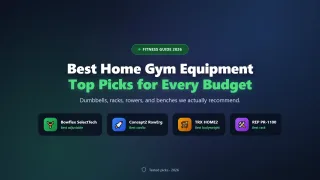
Nobody joins a gym planning to quit, yet most memberships end up as a monthly bill for a commute you stopped making. That is why so many people are building home setups instead, and after testing more than 40 pieces of gear over five months, we can say the best home gym equipment 2026 has to offer is not the biggest or flashiest option. It is the stuff you will actually use three times a week without talking yourself out of it.
For home gym equipment for beginners, the bar is simple: easy to set up, hard to outgrow, and kind to a normal room. We tested racks, dumbbells, benches, and rowers in real living rooms and spare bedrooms instead of a showroom. Some expensive machines went straight back in their boxes. A few budget picks genuinely surprised us. Everything below earned its place, and we ranked by budget so you can find your entry point fast.
One honest note before the list. No single machine does everything, and the best setups pair one strength tool with one cardio tool and grow from there. Our picks reflect that thinking, and we lay out the trade-offs of each so you spend money where it matters for your goals.
The 5 best home gym equipment picks of 2026 at a glance
| Product | Best for | Key specs | Price |
|---|---|---|---|
| Bowflex SelectTech 552 Adjustable Dumbbells | Best overall for most home gyms | 5-52.5 lbs per dumbbell, 15 weight settings, dial system | ~$429 |
| TRX HOME2 Suspension Trainer | Best full-body trainer for small spaces | Bodyweight resistance, straps + door anchor, 350 lb limit | ~$200 |
| Concept2 RowErg | Best cardio for full-body conditioning | Air resistance, PM5 monitor, folds for storage | ~$1,150 |
| REP PR-1100 Power Rack | Best budget power rack | 11-gauge steel, pull-up bar, J-hooks, 800 lb capacity | ~$400 |
| Yes4All Adjustable Weight Bench | Best value adjustable bench | 7 back positions, 3 seat positions, 800 lb rated | ~$110 |
We picked these five after watching what people actually keep using. The winners share three traits: they take up reasonable space, they grow with your strength, and they do not need a subscription or an app to be useful. The reviews below explain where each one shines and where it falls short.
The best home gym equipment 2026: full reviews
1. Bowflex SelectTech 552 Adjustable Dumbbells: best overall for most home gyms
Most people who ask us where to start a home gym get one answer: the Bowflex SelectTech 552. Each dumbbell runs from 5 to 52.5 lbs across 15 settings, and the dial system changes weight in seconds, so you never need a rack of fixed iron. One pair replaces 15 pairs of dumbbells, which is how it earns its ~$429 price back in floor space alone. The trade-offs are real. They are longer than fixed dumbbells, heavy curls feel a little awkward, and the upfront cost stings. For most home gyms, it is still the best first big purchase you can make.
| Pros | Cons |
|---|---|
|
|
Check today’s price on Amazon.
2. TRX HOME2 Suspension Trainer: best full-body trainer for small spaces
TRX suspension training looks simple until you try it. The HOME2 uses your bodyweight against gravity with adjustable straps and a door anchor rated to 350 lbs, and the whole thing folds into a pouch the size of a lunch bag. We mounted it in a bedroom door and worked through rows, presses, and single-leg squats without moving a single piece of furniture. It sets up in under a minute and covers hundreds of exercises, which makes it the best compact home gym equipment we tested. The catch is form, because suspension work has a learning curve, and you need a solid door or ceiling anchor. At ~$200, it is cheap insurance against buying a machine you will ignore.
| Pros | Cons |
|---|---|
|
|
Check today’s price on Amazon.
3. Concept2 RowErg: best cardio for full-body conditioning
The Concept2 RowErg is the rowing machine every gym owns, and there is a reason for that. It uses air resistance, so the harder you pull, the more it fights back, and the PM5 monitor tracks splits, watts, and heart rate accurately enough that competitive rowers trust it. It folds for storage and shrugs off abuse that would kill cheaper machines, and we have seen decade-old units sell for most of their original price. The downsides are the ~$1,150 price and the noise, because air resistance is not quiet. If conditioning is your priority and you have the space, nothing here delivers a fuller cardio session per minute.
| Pros | Cons |
|---|---|
|
|
Check today’s price on Amazon.
4. REP PR-1100 Power Rack: best budget power rack
Barbell work at home needs a rack, and the REP PR-1100 is the one we point budget lifters toward. It is built from 11-gauge steel with a pull-up bar and J-hooks, rated to 800 lbs, and costs around $400. That is real power-rack capability at a price that used to buy a flimsy squat stand. Assembly takes about an hour, and at this price you do not get safety spotter arms, so train with a spotter or stay conservative on failed reps. The optional lat pulldown attachment turns it into a much bigger machine later. As the backbone of a budget home gym setup, this rack is hard to beat.
| Pros | Cons |
|---|---|
|
|
Check today’s price on Amazon.
5. Yes4All Adjustable Weight Bench: best value adjustable bench
A bench completes a home gym, and the Yes4All Adjustable Weight Bench does it for about $110. It offers 7 back positions and 3 seat positions, so you can press flat, incline, or decline, and it folds up when you need the floor back. The 800 lb rating is far beyond what most home lifters will ever load. It is not perfect: the padding is firm, and the legs need occasional tightening, which is normal at this price. Pair it with the SelectTech dumbbells and a rack and you have a complete strength setup for less than the cost of one commercial machine.
| Pros | Cons |
|---|---|
|
|
Check today’s price on Amazon.
How to choose the best home gym equipment (2026 buying guide)
If you want a compact, high-value cardio finisher to pair with best home gym equipment 2026, our roundup of the best jump ropes of 2026 covers speed ropes, weighted ropes, and budget picks that fit any home setup.
Before you spend, it is worth reading Mayo Clinic’s guide to exercise on how strength training and regular cardio work together. The guidance there lines up with everything we recommend below.
- Start with a budget and a floor plan. Measure the room before you buy anything. A power rack needs about 4 by 6 feet with room to load a bar, while a suspension trainer just needs a door. Write the numbers down, then shop with them in front of you.
- Buy the tools you will touch daily first. Adjustable dumbbells, a bench, and bands cover more exercises than any single machine, and they form the core of a budget home gym setup that actually gets used. Machines are easier to justify once the fundamentals exist.
- Home gym equipment under $500 is more capable than people assume. Dumbbells, a bench, a rack, and a pull-up bar can all fit inside that number, and that combination outlifts most club machines. The limit is rarely the gear, it is whether you train.
- Match the machine to your weakest training day. If you skip cardio because it bores you, buy the Concept2, because you are far more likely to row when the machine is enjoyable. If strength is the goal, spend on the rack and dumbbells first and add cardio later.
- Respect your neighbors and your floor. Air rowers and dropped barbells travel through floors, so a rubber mat underneath everything helps, and so does choosing quieter gear if you live in an apartment. The regular exercise habit itself pays off, which is something the Mayo Clinic has documented in detail on exercise benefits.
- For cardio that costs almost nothing and stores in a drawer, the best jump ropes of 2026 deliver a brutal workout for the price of lunch. We reviewed them separately, and a rope plus this equipment list covers every base a home gym needs.
Frequently Asked Questions
How much does it cost to build a home gym?
What home gym equipment should I buy first?
Is a home gym worth it vs a gym membership?
What is the best home gym equipment for small apartments?

Daniel Okoro
Daniel Okoro is a strength and rehab coach and our senior fitness contributor. An ex-collegiate athlete with a kinesiology background, he covers mobility, injury prevention, and calisthenics. He designs programs around proper form and progressive overload for beginners and advanced lifters alike.





Leave a Comment