
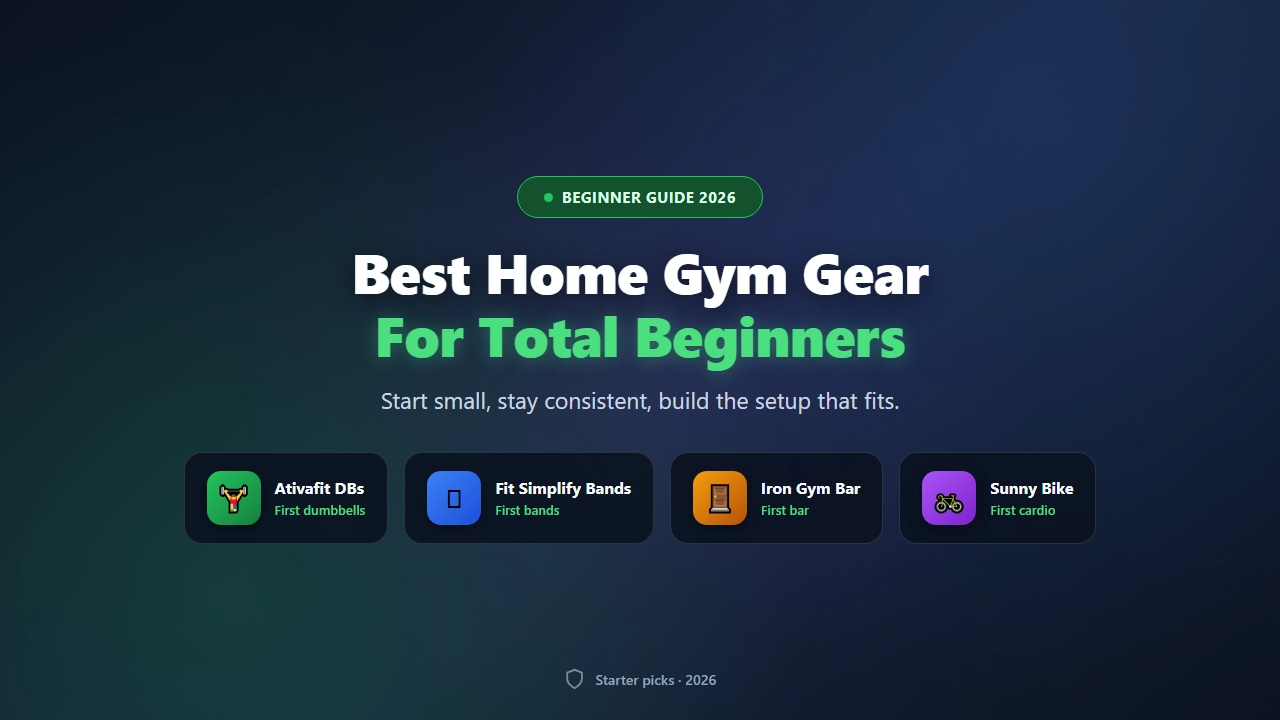
Starting a home gym is confusing because the fitness industry wants you to believe you need everything at once. You do not. The best home gym equipment for beginners 2026 offers can be bought in stages, starting with gear that costs less than a month of gym dues and grows with you as you build the habit.
We tested a starter home gym setup from scratch with complete beginners, people who had never owned equipment before. We watched what they actually used, what intimidated them, and what they ignored. The pattern was consistent: simple, forgiving equipment got used, and complicated machines gathered dust. That is why this list leads with bands, a mat, and a pull-up bar, then builds up to dumbbells and a bike. Beginner workout equipment should lower the barrier to starting, not raise it.
The 5 best beginner home gym picks of 2026 at a glance
Here is the full beginner lineup. Prices are approximate and change with sales.
| Product | Best for | Key specs | Price |
|---|---|---|---|
| Resistance Band Set (Fit Simplify) | Best first purchase | 5 loop bands, 12-40 lbs, guide included | ~$13 |
| Ativafit Adjustable Dumbbells | Best first dumbbells | 5-55 lbs, twist adjustment, stand included | ~$230 |
| ProsourceFit Exercise Mat | Best floor workout mat | 0.5 inch, 6×2 ft, high-density foam | ~$20 |
| Iron Gym Pull-Up Bar | Best first pull-up bar | Doorway mount, multi-grip, 300 lb capacity | ~$30 |
| Sunny Health & Fitness SF-B1805 Bike | Best first cardio machine | Belt drive, 33 lb flywheel, 300 lb capacity | ~$260 |
The 5 best beginner home gym picks of 2026: full reviews
Every pick below was tested with true beginners, not lifters. We scored ease of use, forgiveness for imperfect form, and whether the gear kept people coming back over eight weeks.
1. Resistance Band Set (Fit Simplify): best first purchase
The Fit Simplify band set is the perfect first purchase because the stakes are nearly zero. For around $13 you get five loop bands covering 12 to 40 lbs, a travel pouch, and an exercise guide, which is everything a beginner needs to run their first sessions. Bands are forgiving: you can stop mid-rep without a heavy object falling on you, and the resistance curve teaches you control. The limits show up later, when you get strong enough that 40 lbs feels light. That is the point at which you graduate to dumbbells, and by then you know you will stick with it.
| Pros | Cons |
|---|---|
|
|
Check today’s price on Amazon.
2. Ativafit Adjustable Dumbbells: best first dumbbells
The Ativafit set is the first real strength investment for a beginner, and it is the right one because it grows with you. The twist adjustment spans 5 to 55 lbs per dumbbell, and the included stand keeps the setup tidy. Our beginner testers found the twist-lock system easier to learn than the dials on some competitors, though it does need re-tightening between sets. The bulky shape at heavier weights is the main annoyance. At around $230, this is the piece that takes a starter home gym from band workouts to genuine progressive overload.
| Pros | Cons |
|---|---|
|
|
Check today’s price on Amazon.
3. ProsourceFit Exercise Mat: best floor workout mat
The ProsourceFit mat is the boring, essential purchase that beginners forget. It is a 0.5 inch high-density foam mat, 6 by 2 feet, that protects your knees during lunges, your spine during crunches, and your floor from dumbbells set down hard. At around $20 it is the easiest buy on this list. The foam is firmer than premium mats, which is actually fine for stability work, and it is thinner than thick yoga mats, so balance moves feel planted. It will not last forever under heavy use, but for a first home gym setup it is exactly what you need.
| Pros | Cons |
|---|---|
|
|
Check today’s price on Amazon.
4. Iron Gym Pull-Up Bar: best first pull-up bar
The Iron Gym bar is the best first pull-up bar because it installs in seconds with no tools and no drilling. It mounts in a doorway with a no-screw mechanism, offers multiple grip positions, and holds up to 300 lbs. For a beginner, it also works as an inverted row station, which is the smart progression for building toward your first pull-up. The cons are the standard doorway-bar ones: it can mark the frame over months of daily use, and it is not rated for weighted work. For $30, it turns every doorway in your home into a training station.
| Pros | Cons |
|---|---|
|
|
Check today’s price on Amazon.
5. Sunny Health & Fitness SF-B1805 Bike: best first cardio machine
The Sunny SF-B1805 is the last piece to add, and only once you have proven you train consistently. It is a belt-drive bike with a 33 lb flywheel and a 300 lb capacity, and it rides far smoother than its price suggests. The belt drive keeps it quiet enough for an apartment, and the flywheel gives a solid, stable pedal stroke. The friction resistance wears over time and needs eventual replacement, and there is no Bluetooth or app tracking, just the basic LCD. At around $260 it is a serious bike at a beginner price, and it makes 30 minutes of cardio easy to start.
| Pros | Cons |
|---|---|
|
|
Check today’s price on Amazon.
How to build a starter home gym (2026 buying guide)
Beginners do not need a plan, they need a starting point. Here is the order that works.
- Start under $150. Bands, a mat, and a pull-up bar cost about $65 total and cover a full month of beginner programming. This is the cheapest way to find out whether you will actually train at home before spending real money.
- Add dumbbells once the habit sticks. After three months of consistent training, buy the Ativafit set. That timing matters: beginners who buy dumbbells on day one often abandon them by week four because the habit was never established.
- One machine maximum. A single cardio machine is fine, and the Sunny bike is the best value option. Two machines in a small home means one of them becomes a clothes rack. Pick one and commit.
- Choose easy home gym equipment over impressive equipment. If a piece requires a manual, an app, and a learning curve, a beginner will avoid it. Simple gear gets used. That is the entire strategy.
- Plan for progression. Your first home gym setup should have room to grow. The Ativafit dumbbells go to 55 lbs, the bands cap at 40 lbs, and the bar holds 300 lbs. Know where each piece stops so you know what to upgrade next.
- Budget for a program, not just gear. A free app, a YouTube channel, or a printed routine matters more than any single purchase. The gear is useless without a plan you can follow.
Beginner cardio does not need a machine at all. A jump rope is the classic starter tool, and our best jump ropes of 2026 guide covers picks for every skill level.


Leave a Comment