
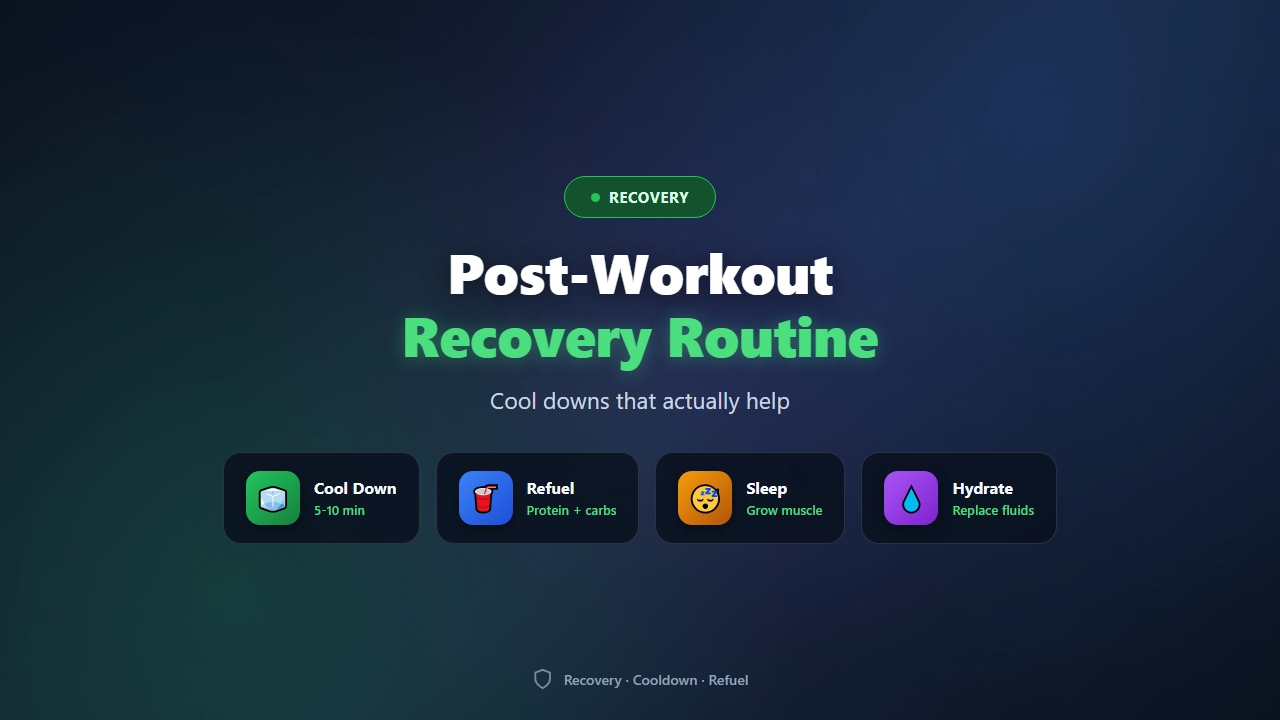
Here is a truth most people never hear: the workout is only half of the equation. Muscle is not built while you train, it is built while you recover. The hours after your workout, and the night of sleep that follows, are when your body repairs muscle fibers, replenishes energy, and adapts to get stronger. A proper post-workout recovery routine makes that process faster and more effective.
This guide covers the best post-workout recovery routine: the cool down, the refuel, the hydration, and the habits that speed up recovery and actually help you grow.
The cool down that matters
The cool down does two things. It gradually brings your heart rate and breathing back to normal, which prevents dizziness and helps your body transition out of fight-or-flight mode, and it starts the recovery process by keeping blood flowing through the muscles you just trained. It does not need to be long, 5 to 10 minutes is plenty.
| Time | Activity | Purpose |
|---|---|---|
| 0:00-3:00 | Light movement, walking or easy cycling | Gradually lower heart rate |
| 3:00-6:00 | Static stretching of trained muscles | Restore length, reduce stiffness |
| 6:00-8:00 | Deep breathing | Calm the nervous system |
| 8:00-10:00 | Foam rolling or self-massage (optional) | Release tension, improve blood flow |
Hold each stretch for 20 to 30 seconds and breathe slowly. The goal is to feel calm and loose, not to push your flexibility, that is a separate session.
The refuel window (it is wider than you think)
The old idea of a 30-minute anabolic window is mostly myth. Your muscles are most receptive to nutrients for a few hours after training, but the exact minute matters far less than whether you eat a proper meal that day. The real rules are simple.
Protein. Aim for 20 to 40 grams of protein in your post-workout meal. This provides the building blocks your muscles need to repair. Carbs. If your workout was intense or long, add some carbohydrates to replenish the energy stores you used. Timing. Eating within a couple of hours after training is ideal, but a full meal later still works if that is how your day goes.
Good post-workout meals are simple: chicken and rice, eggs and toast, a protein shake with fruit, or Greek yogurt with granola. Whole foods beat supplements, and a shake is a convenient option, not a requirement.
Hydration and sleep: the overlooked half
Hydration. You lose a lot of fluid training, and even mild dehydration slows recovery and reduces next-day performance. Drink water steadily after your workout, and check your urine color as a simple gauge, pale yellow means you are well hydrated.
Sleep. This is the single most powerful recovery tool in existence. Deep sleep is when growth hormone is released and muscle repair peaks. Seven to nine hours is the target, and consistent sleep timing matters as much as duration. If you want to recover faster, improve your sleep before buying any supplement.
Recovery habits that actually help
Move lightly on rest days. Walking, easy cycling, and mobility work increase blood flow and speed recovery without adding stress. Manage stress. High stress keeps cortisol elevated, which interferes with recovery and muscle growth. Skip the ice bath hype. Cold exposure is popular, but the research is mixed on whether it improves muscle growth, and it may blunt the training response if overused. Save it for when you are sore and need symptom relief. Do not stretch a strain. If something is actually injured, rest it rather than stretching it. Listen to your body. Persistent pain or unusual fatigue is a signal to rest more, not push through.





Leave a Comment