
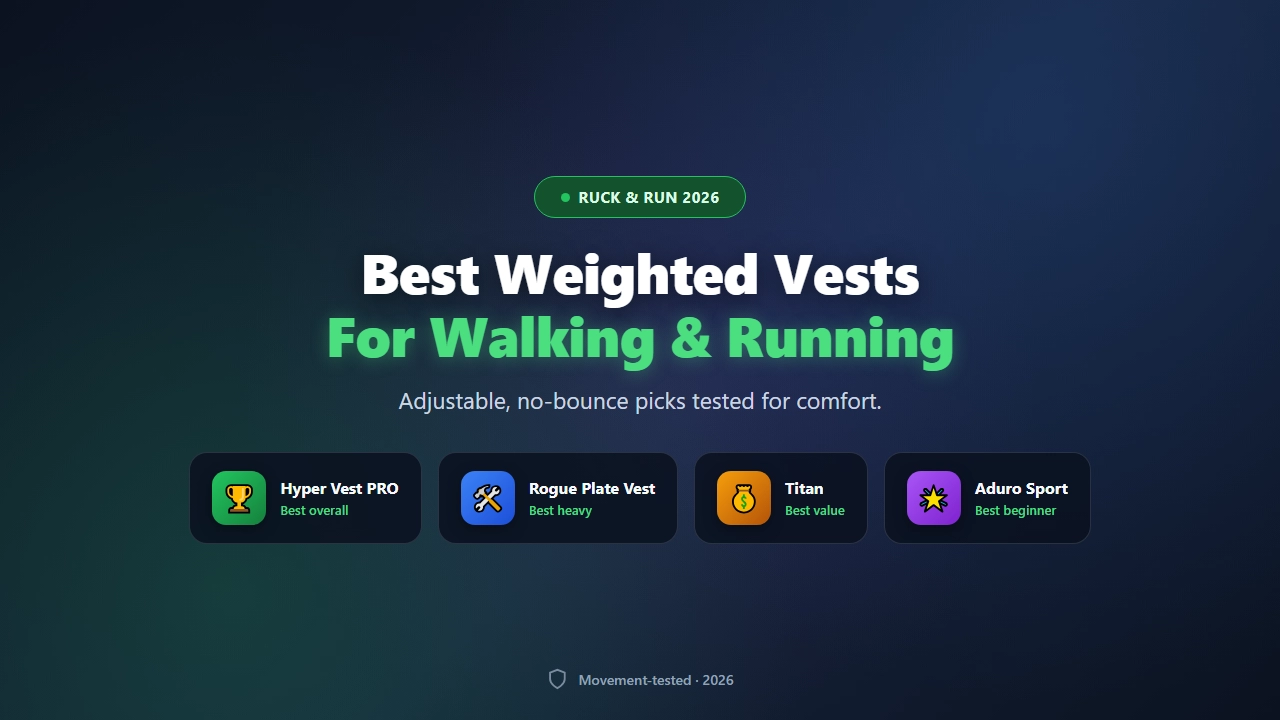
A weighted vest is the cheapest way to make a walk or run meaningfully harder without touching your joints. The best weighted vest 2026 offers adds load to your existing routine, builds bone density, and turns a 30 minute stroll into a session that leaves you breathing hard. The catch is that a bad vest bounces, chafes, and makes you hate the idea before you finish the first mile.
We tested five vests over six weeks, wearing them for walking, jogging, and rucking sessions at loads from 10 to 40 lbs. We scored fit, bounce, breathability, and how the weight sat on the body. We also worked through the numbers on how heavy should weighted vest be for different goals, because most people start too heavy and quit. Whether you want a weighted vest for running or a weighted vest for walking, the right load is lighter than you think.
The 5 best weighted vests of 2026 at a glance
Here is the full lineup. Prices are approximate and shift with sales.
| Product | Best for | Key specs | Price |
|---|---|---|---|
| Hyperwear Hyper Vest PRO | Best overall weighted vest | Adjustable 5-30 lb, air permeable mesh, no bounce | ~$200 |
| Rogue Plate Carrier Weight Vest | Best for heavy loading | Holds standard 45 lb plates, 60+ lb capacity | ~$150 |
| Titan Fitness Adjustable Weighted Vest | Best value adjustable vest | 4-40 lb adjustable, 12 pockets, chest straps | ~$80 |
| ZFOsports Adjustable Weighted Vest | Best budget pick | Adjustable 4-28 lb, 12 pockets, reflective trim | ~$45 |
| Aduro Sport Weighted Vest | Best for beginners | 8-20 lb fixed options, comfortable fit, removable weights | ~$40 |
The 5 best weighted vests of 2026: full reviews
Each vest below logged at least eight sessions across walking, jogging, and rucking. We judged bounce at a run, weight distribution, breathability, and how easy the load was to adjust.
1. Hyperwear Hyper Vest PRO: best overall weighted vest
The Hyper Vest PRO is the vest we reached for every single session, and it earned the top spot by doing the one thing that matters most: not bouncing. The weight sits in segmented packs that hug the torso, and at a jogging pace it stays locked in place. The air permeable mesh keeps you from overheating, and the 5 to 30 lb adjustment range covers walkers through serious ruckers. The price is the hurdle at around $200, and there is no shoulder padding option, so heavy loads can dig in on long rucks. If you run with weight, this is the safest purchase on the list.
| Pros | Cons |
|---|---|
|
|
Check today’s price on Amazon.
2. Rogue Plate Carrier Weight Vest: best for heavy loading
The Rogue plate carrier is a different animal: a vest designed to hold standard 45 lb weight plates, with a capacity north of 60 lbs. If you already own plates, this is the cheapest way to go heavy, since you are only paying for the carrier. It is built like everything Rogue makes, with thick straps and reinforced stitching that took our heaviest rucking sessions without complaint. The downsides are practical: it needs plates to work at all, and at heavy loads it is bulky and shifts more than a fitted vest. This is for rucking and heavy carries, not for running.
| Pros | Cons |
|---|---|
|
|
Check today’s price on Amazon.
3. Titan Fitness Adjustable Weighted Vest: best value adjustable vest
The Titan adjustable vest is the best balance of price and range on this list. It adjusts from 4 to 40 lbs across 12 pockets, with chest straps that keep the load snug, and it costs around $80. That range covers everything from a light walking load to a serious rucking weight, which makes it the most versatile single purchase. The trade-offs show at the top end: past about 30 lbs there is noticeable bounce, and the material is less breathable than the Hyperwear, so summer sessions get warm. For most people, this is the vest to buy if the Hyperwear price stings.
| Pros | Cons |
|---|---|
|
|
Check today’s price on Amazon.
4. ZFOsports Adjustable Weighted Vest: best budget pick
The ZFOsports vest is the budget entry that proves you can get a real adjustable vest for under $50. It adjusts from 4 to 28 lbs across 12 pockets and includes reflective trim for early morning or night runs, a detail we appreciated on dark winter mornings. The fit runs small, so size up, and the mesh is rougher than premium vests, which chafed our tester through a thin shirt on a long session. For a first vest to test whether weighted walking is for you, it is a genuinely good deal. Just expect to upgrade if you fall in love with the training.
| Pros | Cons |
|---|---|
|
|
Check today’s price on Amazon.
5. Aduro Sport Weighted Vest: best for beginners
The Aduro Sport vest is the simplest option here, and that is its strength. It comes in fixed 8, 12, and 20 lb versions, fits comfortably out of the box, and has removable weight packs if you want to start lighter than the label. For a beginner testing whether they like weighted training, the simplicity removes every excuse: no pocket loading, no adjustment fiddling, just put it on and walk. The limits are the fixed options and the low max weight, so you will outgrow it if you progress seriously. At around $40 it is the cheapest comfortable way to start.
| Pros | Cons |
|---|---|
|
|
Check today’s price on Amazon.
How to choose the best weighted vest (2026 buying guide)
Most people buy the wrong vest because they buy too heavy. Here is how to get it right.
- Start at 5 to 10% of body weight. A 70 kg person starts with 3.5 to 7 kg, which is 8 to 15 lbs. The Aduro at 8 lbs or the ZFOsports at its lightest setting are perfect starting points. Add weight only when the current load feels easy for your full session.
- Match the vest to the activity. Running demands a fitted, bounce-free vest like the Hyperwear. Walking and rucking tolerate a bulkier vest like the Titan or the Rogue plate carrier. Do not buy a rucking vest for running, and do not expect a running vest to carry 60 lbs.
- Check the adjustment range, not the max. A vest that adjusts from 4 to 40 lbs covers years of progress. A fixed-weight vest caps your growth. If you are buying one vest for the long term, adjustable is the smarter money.
- Weight distribution matters more than capacity. A vest that concentrates load on your shoulders will hurt in 20 minutes. Look for segmented packs that wrap the torso, like the Hyperwear, and avoid designs where all the weight hangs low.
- Breathability for summer training. Air permeable mesh vests run cooler. The Hyperwear leads here, the Titan and ZFOsports run warmer. If you train in a hot garage or outside in summer, this matters more than you expect.
- Consider the extras. Reflective trim for night runs, shoulder padding for heavy rucks, and chest straps for a snug fit all change the experience. The ZFOsports has the trim, the Hyperwear lacks padding, and the Titan has the straps. Match the details to your routine.
A weighted vest also pairs well with bodyweight finishers. Add a few rounds from our best jump ropes of 2026 at the end of a ruck for a conditioning boost.






Leave a Comment