Pelvic Floor Exercises for Women: A Comprehensive Guide

We’ll go over what Pelvic Floor Exercises for Women are, how to perform them, and their advantages in this post.
Table of Contents
Pelvic floor exercises also known as Kegel exercises help strengthen the pelvic muscles.
These muscles support the bladder, uterus, and rectum, and are important for bladder and bowel control, sexual function, and childbirth.
Pelvic floor exercises are particularly important for women, as they are more likely to experience issues with their pelvic muscles due to pregnancy, childbirth, and menopause.
What are Pelvic Floor Exercises?
The pelvic muscles are a group of muscles that support the bladder, uterus, and rectum.
These muscles stretch from the pubic bone at the front of the body to the tailbone at the back.
They play a crucial role in controlling the bladder and bowel, sexual function, and childbirth.
When these muscles become weak women may experience issues such as urinary incontinence, fecal incontinence, and pelvic organ prolapse.
Pelvic floor exercises also known as Kegels are exercises that help strengthen the pelvic muscles.
They involve contracting and relaxing the muscles that support the pelvic organs.
These exercises can be done at any time and in any position, making them easy to incorporate into your daily routine.
How to Do Pelvic Floor Exercises?
To do pelvic floor exercises, you first need to identify the muscles you need to target.
One way to do this is to try to stop the flow of urine midstream.
The muscles you use to do this are your pelvic floor muscles.
However, it is important not to do this too often as it can disrupt your normal urination patterns and cause urinary tract infections.
Once you have identified your pelvic muscles, you can start doing pelvic floor exercises.
To do this, follow these steps:
- Sit or lie down comfortably with your knees slightly apart.
- Tighten the muscles around your vagina and anus as if you were trying to stop yourself from passing wind and urine at the same time.
- Hold the contraction for 5 seconds, then relax for 5 seconds.
- Repeat the contraction and relaxation 10 times in a row.
- Do this set of 10 exercises three times a day.
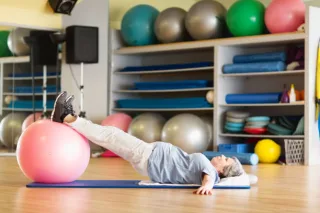
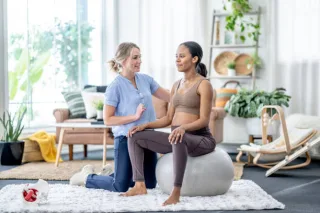

As your muscles get stronger, you can increase the length of time you hold the contraction for, up to 10 seconds.
It is important to note that you should not hold your breath or squeeze your thighs or buttocks while doing these exercises.
You should also avoid tensing your abdominal muscles, as this can put pressure on your pelvic floor muscles.
Benefits of Pelvic Floor Exercises for Women
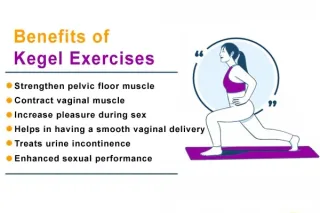
Pelvic floor exercises offer a range of benefits for women. These include:
Improved bladder and bowel control
Pelvic floor exercises can help improve bladder and bowel control, reducing the risk of urinary and fecal incontinence.
Increased sexual satisfaction
Strong pelvic muscles can help improve sexual sensation and orgasm in women.
Reduced risk of pelvic organ prolapse
Pelvic floor exercises can help reduce the risk of pelvic organ prolapse, where the uterus, bladder, or rectum can bulge into the vagina.
Improved recovery after childbirth
Pelvic muscle exercises can help speed up the recovery process after childbirth, reducing the risk of complications such as urinary incontinence.
Improved quality of life
Strong pelvic floor muscles can improve the overall quality of life, reducing embarrassment and discomfort associated with urinary and fecal incontinence.
Top 10 Pelvic Floor Exercises for Women
Kegel exercises
Kegels are the most popular and efficient exercises for strengthening the pelvic floor muscles.
To do Kegels, tighten the muscles that are used to block the flow of pee, hold for a short period of time, and then let go. Several times during the day, repeat.
Squats
Squats target not only the lower body but also engage the pelvic floor muscles.
Stand with your feet shoulder-width apart, lower your body as if sitting back into a chair, then rise back up to the starting position.
Be mindful of maintaining proper form and engaging your pelvic muscles during the movement.
Bridge pose
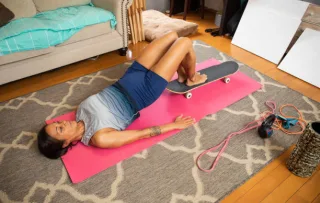
Lie on your back with your knees bent and feet flat on the ground.
Lift your hips off the ground, creating a straight line from your knees to your shoulders.
Squeeze your glutes and engage your pelvic floor as you hold the position for a few seconds before lowering back down.
Deadlifts
The pelvic muscle and other muscles are worked out by the compound exercise known as the deadlift.
The starting position should include hip-width apart feet, slightly bent knees, and a weight (a dumbbell or barbell) in front of you.
Lift the weight back up utilizing your glutes and pelvic floor muscles after lowering it to the ground while hinged at the hips.
Lunges
Lunges target the lower body, including the pelvic floor.
Start by standing with your feet hip-width apart.
Take a forward step while lowering your body toward the ground by bending both knees.
Repeat on the opposite side, pushing yourself back up to the starting position.
Pilates
Pilates is a low-impact exercise method that focuses on core strength and stability, including the pelvic muscle.
Many Pilates exercises incorporate controlled movements and breathwork to engage and strengthen the pelvic floor muscles.
Yoga poses such as the Butterfly pose and Child’s pose
The pelvic floor can be stretched and strengthened through yoga movements.
As you sit in the butterfly position, softly press your knees toward the ground while keeping the soles of your feet in contact.
In the child’s pose, which is a relaxation position, you squat on the floor, lean back slightly on your heels, and softly extend your arms in front of you.
Pelvic tilts
Pelvic tilts are simple exercises that target the pelvic floor and help improve pelvic stability.
Lie on your back with your knees bent.
Engage your core and tilt your pelvis upward, pressing your lower back into the ground.
Release and repeat several times.
Clamshells
Clamshells target the hip abductor muscles which indirectly support the pelvic muscle.
Lie on your side with your knees bent and legs stacked.
Keeping your feet together, lift your top knee while keeping your hips stable.
Lower it back down and repeat on the other side.
Hip thrusts
Hip thrusts mainly work the glutes while also involving the pelvic floor.
Leaning your back on a bench or other sturdy object while lying on the ground.
Place a dumbbell or a barbell over your hips.
As you establish a straight line with your body, drive through your heels and push your hips off the ground.
At the top, tighten your glutes and contract your pelvic muscle, then slowly bring yourself back down.
Pelvic Floor Muscle Training Exercises
Pelvic floor muscle training, also known as Kegel exercises, are exercises that can help strengthen the muscles that support your bladder, bowel, and uterus or vagina.
These muscles can weaken due to pregnancy, childbirth, aging, or certain medical conditions.
Strong pelvic muscles can help:
- Improve bladder and bowel control
- Reduce the risk of pelvic organ prolapse
- Improve recovery from childbirth and gynecological surgery
- Increase sexual sensation and orgasmic potential
- Increase social confidence and quality of life
You might wish to consult a doctor if you are having problems identifying your pelvic floor muscles or if your symptoms do not get better after performing pelvic floor exercises for a few weeks.
Remember to consult with a healthcare professional or a qualified fitness trainer before starting any new exercise program, especially if you have any underlying health conditions.
They can provide personalized guidance and ensure that you are performing the exercises correctly and safely.
What are the best pelvic floor exercises for women?
When is the best time to do pelvic floor exercises for women?
Are pelvic floor exercises right for women?
How can I strengthen my pelvic floor fast?
How do women strengthen their pelvic floor?
How long does it take to strengthen the pelvic floor?
How do I know if my pelvic floor is weak female?
How to tighten pelvic floor muscles quickly?
Related reading
Pelvic Floor Exercises For Men: The Comprehensive Guide in 2023 · How To Do Pelvic Floor Exercises: A Step-by-Step Guide · Pelvic Floor Exercises for Pregnant Women: Strengthening for…

Rupert Doyle
Rupert Doyle is a registered nutritionist (mBANT) and our lead health-and-wellness editor. He translates complex physiology and diet research into actionable plans, covering weight management, breathing, posture, and recovery. Every health claim is checked against primary clinical literature before publication.





Leave a Comment