

Every woman’s pregnancy is a beautiful experience, yet it has its difficulties. Kegel exercises for pregnant women provide a lot of advantages. The body changes significantly during pregnancy including hormonal changes, weight growth, and weakening of the pelvic muscles.
In order to have a safe pregnancy and delivery, it is crucial to take good care of your body. Perform Kegel exercises as one method of achieving this.
Dr. Arnold Kegel who created Kegels in the 1940s is honored by their name.
The pelvic floor muscles which support the bladder, uterus, and rectum are strengthened by these workouts.
These muscles help in controlling urine flow, sexual function, and bowel movements.
During pregnancy, the pelvic floor muscles weaken due to the added weight of the baby, hormonal changes, and the pressure of the growing uterus.
This can lead to urinary incontinence, a condition where a woman involuntarily leaks urine. It can help prevent this and other pelvic floor disorders.
Here is a detailed guide on Kegel exercises for pregnant women
Identify your pelvic floor muscles:
Before you start doing Kegels it is essential to know how to locate your pelvic floor muscles.
To do this, imagine that you are trying to stop the urine midstream.
The muscles that you use to do this are your pelvic muscles.
Squeezing the muscles surrounding the vagina with a finger is another method of identifying these muscles.
Around your finger, there should be a tightening sensation.
You have found your pelvic floor muscles if you can feel them there.
How to do Kegel exercises:
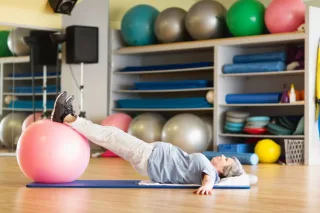
Now that you have identified your pelvic floor muscles, it’s time to start doing Kegel exercises.
Here is a step-by-step guide on how to do Kegel exercises:
Step 1: Sit or lie down in a comfortable position.
Step 2: Contract your pelvic floor muscles for three to five seconds.
Step 3: Relax your pelvic floor muscles for three to five seconds.
Step 4: Repeat the contraction and relaxation process ten times.
Step 5: Do three sets of ten repetitions every day.
It is essential to take it slow and gradually increase the duration and intensity of the exercises.
Benefits of Kegel exercises during pregnancy:
Kegels have several benefits during pregnancy.
Here are some of them:
Prevents urinary incontinence:
As mentioned earlier, pregnancy can weaken the pelvic muscles, leading to urinary incontinence. It can help prevent this by strengthening the muscles that control urine flow.
Eases delivery:
Strong pelvic muscles can help ease delivery by making the pushing process more comfortable. It can also prevent tears during delivery.
Improves sexual function:
Strong pelvic muscles can improve sexual function by increasing the intensity of orgasms.
Top 10 Pelvic Floor Exercises For Pregnant Women
Your pelvic floor is a group of muscles that support your bladder, uterus, and rectum. It also plays a role in sexual function.
During pregnancy, your pelvic muscles can weaken due to the extra weight of your baby.
This can lead to problems such as urinary incontinence, prolapse, and back pain.
Pelvic floor exercises can help to strengthen your pelvic floor muscles and improve your overall well-being during and after pregnancy.
They are safe and effective for most pregnant women.
Here are the top 10 pelvic floor exercises for pregnant women:
Kegels:
Kegels are the most well-known pelvic floor exercise.
To do a Kegel, simply contract your pelvic floor muscles as if you are trying to stop the flow of urine.
Hold for 5 seconds, then relax. Repeat 10 times.
Bridges:
Bridges are a fantastic exercise for hamstrings and pelvic floor muscles.
Lie on your back with your knees bent and your feet flat on the floor to do a bridge.
As soon as your body is in a straight line from your shoulders to your knees, lift your hips off the ground.
After holding for five seconds, bring your hips back down. Ten times in total.
Squats:
Another excellent workout for your thighs and pelvic floor muscles is the squat.
Stand with your feet shoulder-width apart and your toes pointing outward to perform a squat.
As though you were sitting in a chair, crouch down with your hips and knees bent.
Maintain a straight back and a tight core.
Return to standing after squatting down until your thighs are parallel to the ground. Ten times in total.
Lunges:
You may strengthen your quadriceps and pelvic floor muscles by doing lunges.
Step one leg forward and lower your torso until both knees are bent at a 90-degree angle to do a lunge.
Make sure your rear knee is barely off the ground and your front knee is directly above your ankle.
Push yourself back up to the starting position after holding for five seconds. Ten times each leg, repeat.
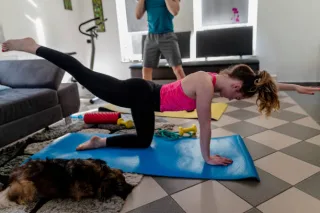
Bird dog:
The bird dog exercise is a fantastic approach to building core and pelvic floor strength.
On your hands and knees, begin the bird dog exercise.
Straighten out your left leg and right arm.
After holding for five seconds, go back to the beginning position.
10 times on each side, repeat.
Plank:
You may improve your core and pelvic floor muscles by performing the plank exercise.
Start in a push-up position with your forearms on the floor to perform a plank.
Hold your entire body in a straight line from your head to your heels.
Hold the position for 30 seconds while keeping your core engaged. 2-4 times.
Side plank:
Your core and pelvic floor muscles can be strengthened by performing the side plank exercise.
Start in the push-up posture with your forearms on the floor to perform a side plank.
Your body should be turned so that you are resting on your right forearm as you stack your feet on top of one another.
Lift your left arm into the air. From your head to your heels, keep your body in a straight line.
Hold the contraction for 30 seconds. On each side, repeat a few times.
Cat-cow:
Your pelvic floor muscles can be stretched and strengthened by performing the cat-cow exercise.
Commence the cat-cow workout by getting on your knees.
Lift your head and tailbone and arch your back as you inhale.
Exhale while bending your back and bringing your chin to your chest. Ten times in total.
Knee to chest:
Your pelvic floor muscles and hips can be stretched effectively with the knee-to-chest exercise.
Knees should be bent when you lie on your back and perform the knee-to-chest movement.
One knee should be brought up to the chest and held there with both hands.
Pull your knee gently toward your chest until your hip and lower back start to stretch.
30 seconds should be held before switching to the opposite side.
Butterfly stretch:
You can stretch your inner thighs and pelvic floor muscles by using the butterfly stretch.
Sit on the floor with your knees bent and your feet touching to perform the butterfly stretch.
Till your inner thighs and groin begin to stretch, gently press your knees toward the floor.
Hold for a minute.
Precautions
While Kegels are safe for most pregnant women it is essential to take some precautions.
Here are some of them:
- Avoid doing these exercises while urinating, as this can weaken the pelvic muscles.
- Do not overdo it. Start with a few repetitions and gradually increase the duration and intensity.
If you experience any pain or discomfort while doing Kegel exercises, stop immediately and consult your doctor.
When to start doing Kegel exercises?
It can be started at any time during pregnancy.
To avoid pelvic floor issues it is suggested to start early.
Starting as early as the first trimester and continuing throughout pregnancy can be done by you.
How to incorporate Kegel exercises into your daily routine
You may easily incorporate it into your regular routine because it is straightforward and uncomplicated to carry out.
Here are some tips on how to do it:
Set a reminder:
Set a reminder on your phone or calendar to do Kegels at specific times during the day. This will help you remember to do them regularly.
Do them during daily activities:
You can do it during daily activities like brushing your teeth, cooking, or watching TV. This will help you remember to do them and make them a part of your daily routine.
Incorporate them into your workout:
It is an opportunity for you can work into your workout routine.
Among other pelvic floor exercises, you may do them when you do lunges, squats, or other similar exercises.
Do them before and after childbirth:
Both before and after childbirth, it is crucial.
They can assist in preparing your pelvic floor muscles for delivery prior to childbirth.
They can aid in the postpartum strengthening of your pelvic muscles and help you avoid incontinence.
Adding it to your daily routine is simple and helps avoid pelvic floor issues both during and after pregnancy.
Set a reminder, perform them while going about your everyday business, include them in your workout, perform them before and after childbirth, and enlist the help of your loved ones.
Making it a part of your everyday practice will help you have a safe pregnancy and delivery.






Leave a Comment