
Wrist wraps are elastic bands you wrap around the wrist before pressing, and they do two things: they stop the wrist rolling back under a heavy bar, and they store a little elastic energy that helps you lock out. The trade-off is mobility, because a wrap that is stiff enough to help a heavy bench is too stiff for a snatch or a thruster.
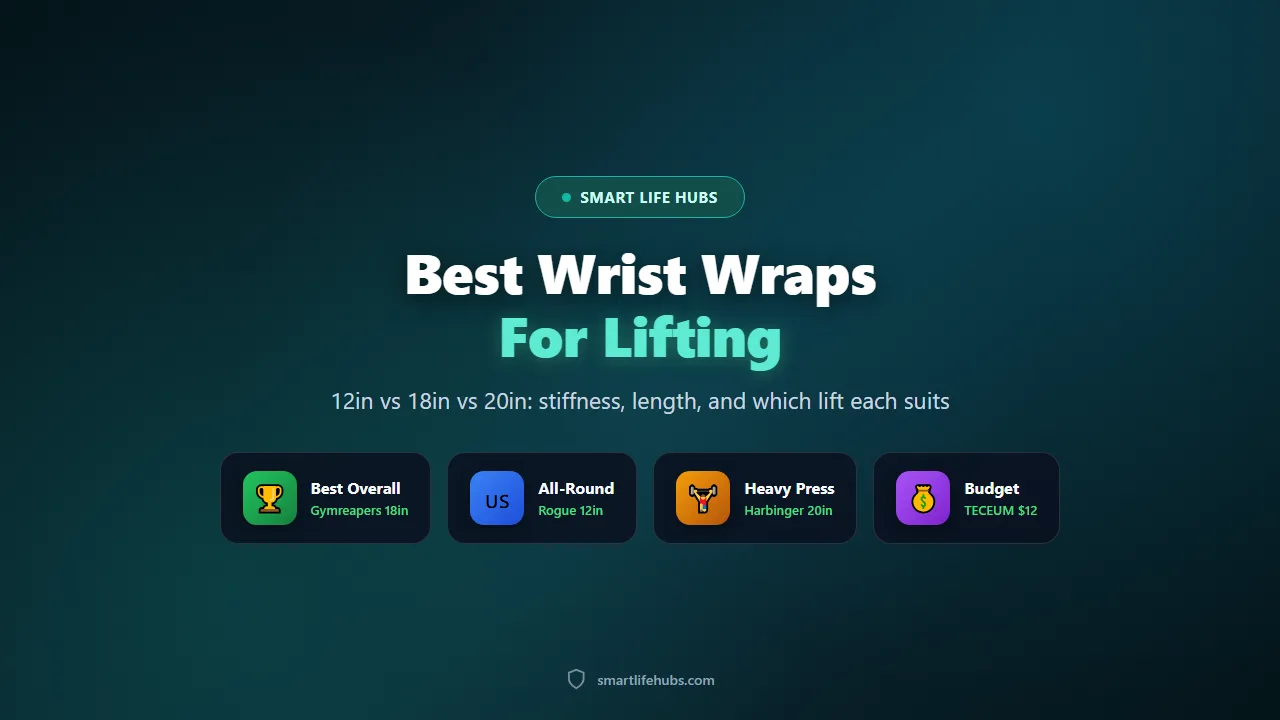
Prices run from about $12 to $35, which makes this one of the cheapest upgrades in lifting. The Gymreapers 18 inch IPF wrap at about $15 to $20 is the best overall pick, the Rogue 12 inch at about $28 to $35 is the best all-round short wrap, and the Harbinger Pro 20 inch is the best for a heavy press.
I pulled MyExercisePlan’s reviewed wrist wrap guide, Garage Gym Lab’s 2026 comparison, BodyMotionLab’s science-focused guide, Garage Gym Reviews’ tested list and Tactical Gear Guy’s heavy lifting roundup. Where a figure is a claim rather than a measurement, I say so. Prices are US street prices as of November 2026.
At a glance
| Product | Best for | Key specs | Price |
|---|---|---|---|
| Gymreapers 18 inch IPF | Best overall | 18 inch, IPF approved, stiff elastic and cotton, reinforced thumb loop | About $15 to $20 |
| Rogue Fitness 12 inch | Best all-round short | 12 inch, 40 percent elastic and 50 percent cotton, fast to apply | About $28 to $35 |
| Harbinger Pro 20 inch | Best for heavy pressing | 20 inch, synthetic, maximum support for bench and overhead | About $30 |
| Schiek Model 1112 12 inch | Best adjustable | 12 inch, adjustable tension, Velcro closure | About $30 |
| TECEUM 18 inch | Best budget | 18 inch, polyester elastic, first pair for new lifters | About $12 |
The best wrist wraps for lifting of 2026
1. Gymreapers 18 inch IPF, best overall
The Gymreapers 18 inch weightlifting wrist wrap costs about $15 to $20 and it is the wrap most lifters should buy. It is IPF approved, so it is legal in competition, it uses a polyester-elastic weave with reinforced thumb loops, and the 18 inch length gives you three passes around the wrist and the tension a heavy bench needs. MyExercisePlan scores it 9.6 out of 10 as the best overall, and Garage Gym Lab and Garage Gym Reviews both name Gymreapers the best blend of support, comfort and value, with a lifetime replacement guarantee on some versions.
The trade-offs are the Velcro and the initial smell. MyExercisePlan notes the stitching and Velcro may show wear under heavy use compared with sturdier alternatives, and that the initial chemical odour can be off-putting until they air out.
- Pros: About $15 to $20; IPF approved; 18 inch; three passes; lifetime guarantee on some versions
- Cons: Velcro and stitching wear under heavy use; initial odour; too stiff for Olympic lifts
Check today’s price on Amazon.
2. Rogue Fitness 12 inch, best all-round short
The Rogue Fitness 12 inch wrist wrap costs about $28 to $35 and it is the wrap for general training rather than maximal pressing. It uses a 40 percent elastic, 10 percent polyester and 50 percent cotton blend that is less rigid than a powerlifting wrap, goes on quickly and suits CrossFit, Olympic lifts and general work. Tactical Gear Guy names it the best overall all-round short wrap, and Garage Gym Lab calls it the CrossFit favourite made in the USA in multiple lengths.
The trade-offs are the support and the length. BodyMotionLab rates the 18 and 24 inch Rogue wraps as the best for serious lifters but notes the stiffer blend reduces wrist mobility, so you will not want to snatch in them. The 12 inch version is a compromise that suits most training.
- Pros: About $28 to $35; cotton-rich and comfortable; fast to apply; multiple lengths
- Cons: Less support than a stiff powerlifting wrap; 90-day warranty on some versions
Check today’s price on Amazon.
3. Harbinger Pro 20 inch, best for heavy pressing
The Harbinger Pro 20 inch costs about $30 and it is the longest wrap here, giving you four passes around the wrist and the most support for bench and overhead pressing. Tactical Gear Guy lists it as the most reliable press option, and the 20 inch length is the standard choice for powerlifters who want the wrist locked.
The trade-offs are the bulk and the mobility. A 20 inch wrap is slower to apply and remove, and it is the wrong tool for dynamic work, so it suits a dedicated press day rather than a mixed session.
- Pros: About $30; 20 inch; four passes; maximum press support
- Cons: Bulky; slow to apply; poor for Olympic lifts and high-rep work
Check today’s price on Amazon.
4. Schiek Model 1112 12 inch, best adjustable
The Schiek Model 1112 costs about $30 and it is the wrap for people who want to fine-tune the tension rather than rely on wrap technique. It is a 12 inch adjustable wrap with a Velcro closure, and Tactical Gear Guy lists it as the adjustable heavy support option. Schiek’s model 1100 WS is the cushioned neoprene alternative if you want more padding.
The trade-offs are the closure and the padding, which add bulk, and the price, which is at the top of this range for a 12 inch wrap. If you wrap well, a simpler elastic wrap does the same job for less.
- Pros: About $30; adjustable tension; Velcro; cushioned versions available
- Cons: Bulkier than plain elastic; expensive for 12 inch; closure can slip
Check today’s price on Amazon.
5. TECEUM 18 inch, best budget
The TECEUM 18 inch wrist wrap costs about $12 and it is the wrap to buy if you are not sure you will use wraps at all. It is an 18 inch polyester elastic wrap with a thumb loop, and MyExercisePlan scores it 9.1 out of 10 as the best budget first pair, logging how it held up at one month and three months.
The trade-offs are the support and the durability, which are lighter than the Gymreapers and Rogue options. For moderate pressing and general training it is adequate, and it is the sensible way to learn whether you like wrapping before spending $30.
- Pros: About $12; 18 inch; cheap enough to try; decent for moderate lifting
- Cons: Lighter support; less durable; not for maximal pressing
Check today’s price on Amazon.
How to wrap for pressing
Start with the band on the back of the wrist, not the palm side, because the goal is to stop the wrist extending backwards. Feed the thumb loop over your thumb first so the wrap cannot spin, then wind it across the joint with each pass overlapping the last by about half its width.
The tension should come from the passes, not from one tight turn. Three to four even passes at 18 inches give more support than one brutal turn followed by loose ones, and even tension is what stops the wrist rolling rather than pinching one spot.
Finish with the Velcro where you can reach it with your other hand, and test the position before you unrack. Make a fist, extend the wrist and check that you cannot roll it back far. If your hand tingles or goes pale, it is too tight.
For bench press, wrap a little tighter than for overhead work, because the wrist position is more extended under the bar. For overhead press, leave enough room to rack the bar comfortably, and for any dynamic lift, leave the wraps off entirely.
Between sets, loosen the wrap rather than leaving it tight for the whole session, because constant compression is uncomfortable and unnecessary once the bar is racked.
Living with wrist wraps
The first thing you learn is that wrap technique matters as much as the wrap. The band should start on the back of the wrist, cross the joint and finish with the Velcro where you can reach it, and you want it tight enough to stop the wrist extending but not so tight that your hand goes numb. Most people start too loose and wonder why nothing changes.
The second is that wraps are for specific lifts. A stiff 18 or 20 inch wrap belongs on heavy bench and overhead work, and a 12 inch wrap suits everything else. Wearing a powerlifting wrap through a WOD or a snatch session will cost you wrist mobility and slow you down.
The third is that wraps are a support, not a fix. If your wrist hurts because your pressing technique is off, a wrap will hide the symptom and let the problem continue. Sort the technique first, then use wraps to support heavy sets.
The fourth is hygiene and wear. Wraps absorb sweat and the Velcro picks up lint, so wash them occasionally and replace them when the elastic loses its tension. A wrap that no longer holds is worse than no wrap because it gives you false confidence.
The fifth is the rulebook. If you compete, check whether your federation allows wraps and what length and stiffness are permitted. IPF approval on the Gymreapers matters only if you lift in an IPF meet.
The short version is that wraps are cheap, effective and easy to misuse, so buy the length for your main lift and learn to wrap it properly.
How to choose wrist wraps
Pick the length for the lift. A 12 inch wrap suits general training, CrossFit and Olympic lifts. An 18 inch wrap is the all-round powerlifting length and gives three passes. A 20 inch wrap gives the most support for a dedicated heavy press.
Match the stiffness to the movement. Stiff wraps lock the wrist for heavy bench and overhead pressing and cost you mobility. Softer cotton-rich wraps suit dynamic work. If you do both, buy two pairs rather than compromising on one.
Check the thumb loop and the Velcro. A reinforced thumb loop stops the wrap slipping as you wind, and a wide Velcro patch holds under load. Check the warranty, because Gymreapers offers a lifetime replacement on some versions while Rogue offers 90 days.
Think about competition. If you lift in a federation, check the approved equipment list before you buy. IPF approval on a wrap is only useful if you compete under those rules.
Do not wrap too tightly. A wrap that makes your hand tingle or go pale is cutting circulation. Support the joint, do not strangle it, and loosen it between sets if your hands feel numb.
Learn the technique. Watch a few videos on wrapping for bench and overhead press, because a well-applied cheap wrap beats a badly applied expensive one. The tension comes from the passes, not the product.
Do not rely on them for pain. If your wrist hurts during pressing, the wrap is masking a technique or mobility problem. Get that assessed rather than wrapping tighter.
Think about the rest of the kit. Our grip strengthener guide covers the hand and forearm strength that supports the wrist, and our fitness tracker roundup covers logging the pressing.
Frequently asked questions
Frequently Asked Questions
6What are the best wrist wraps for lifting?
The Gymreapers 18 inch IPF wrap at about $15 to $20 for most lifters, because it is competition legal and stiff enough for heavy pressing. The Rogue 12 inch at about $28 to $35 for general training, and the Harbinger Pro 20 inch at about $30 for a dedicated press.
Do wrist wraps actually help?
Yes. They stop the wrist rolling back under load and store a little elastic energy at lockout, which is why powerlifters use them. The trade-off is reduced wrist mobility, so they suit pressing rather than dynamic lifts.
What length wrist wraps should I buy?
12 inches for general training and Olympic lifts, 18 inches for all-round powerlifting, and 20 inches for maximum support on bench and overhead press.
Are wrist wraps worth it?
Yes, because they cost $12 to $35 and can add a meaningful amount to a heavy press. They are one of the cheapest strength upgrades in the gym.
Can you wear wrist wraps for every exercise?
You can, but you should not. A stiff wrap costs you wrist mobility, so it suits heavy pressing and gets in the way of snatches, cleans and high-rep work.
How tight should wrist wraps be?
Tight enough to stop the wrist extending under load, but not so tight that your hand tingles or changes colour. Loosen them between sets if your hands go numb.
The bottom line
Buy the Gymreapers 18 inch IPF wrap if you want the best overall: about $15 to $20, competition legal and stiff enough for heavy pressing. Buy the Rogue 12 inch at about $28 to $35 if you want a comfortable all-round wrap for general training, the Harbinger Pro 20 inch at about $30 if you want maximum press support, the Schiek at about $30 if you want adjustable tension, and the TECEUM at about $12 if you are trying wraps for the first time. MyExercisePlan’s reviewed wrist wrap guide reached the same conclusion on the Gymreapers as the pair most lifters should buy. The honest summary is that the length decides the support, the wrap technique decides whether it works, and a $15 pair used correctly beats a $35 pair wrapped badly. What are you mainly pressing? Tell us in the comments.



Leave a Comment